Metadata Management in Technical Communication
A Strategic Foundation for Data Quality, Scalable Content, and AI
10. August 2026
Why Information and Data Quality Are Becoming a Systemic Issue
Metadata management has become a key requirement for modern technical communication, especially given the profound changes in the way content is created and used. Where static documents were once created, dynamic information systems are now emerging: content is structured in a modular way, delivered through various channels, and increasingly interpreted by machines. As part of this development, the concept of quality is also shifting. It is no longer enough for content to be accurate and understandable; it must also be discoverable, context-aware, and machine-processable.
These requirements raise a crucial question: How can we systematically ensure and improve the quality of information—and, by extension, the quality of data?
The answer no longer lies solely in the quality of the writing, but also in the classification of information and, consequently, in metadata management. Metadata is more than just supplementary descriptive information. When modeled consistently and linked to controlled vocabularies or semantic models, they form an important context and control layer for content. As a result, its role shifts from an operational tool to a strategic resource for data quality management.
Metadata in Technical Communication: Structure, Discoverability, and Context
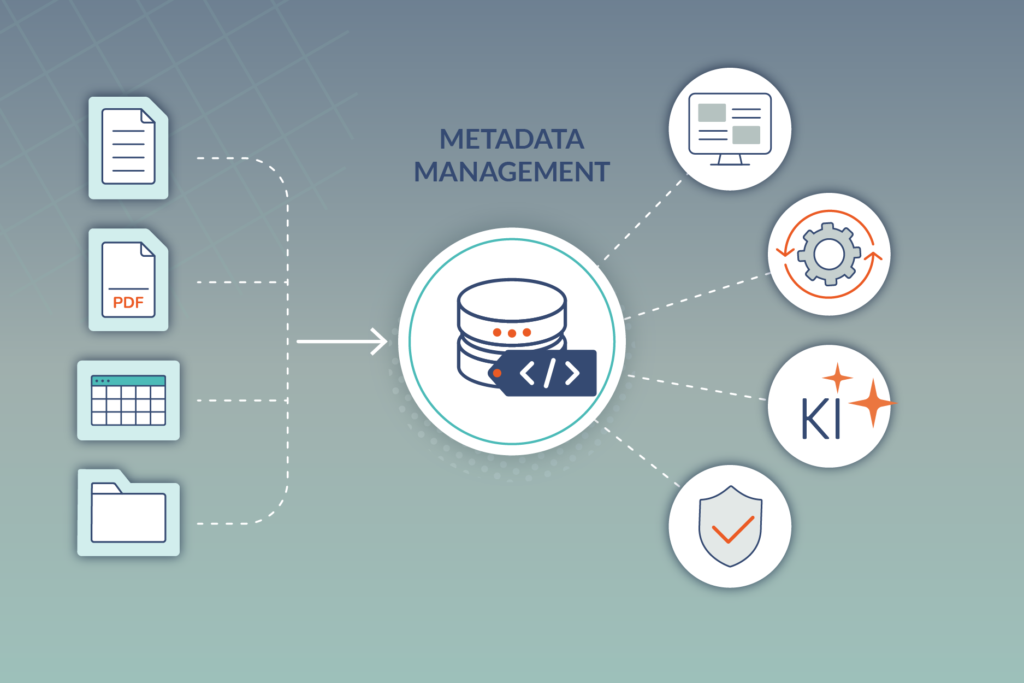
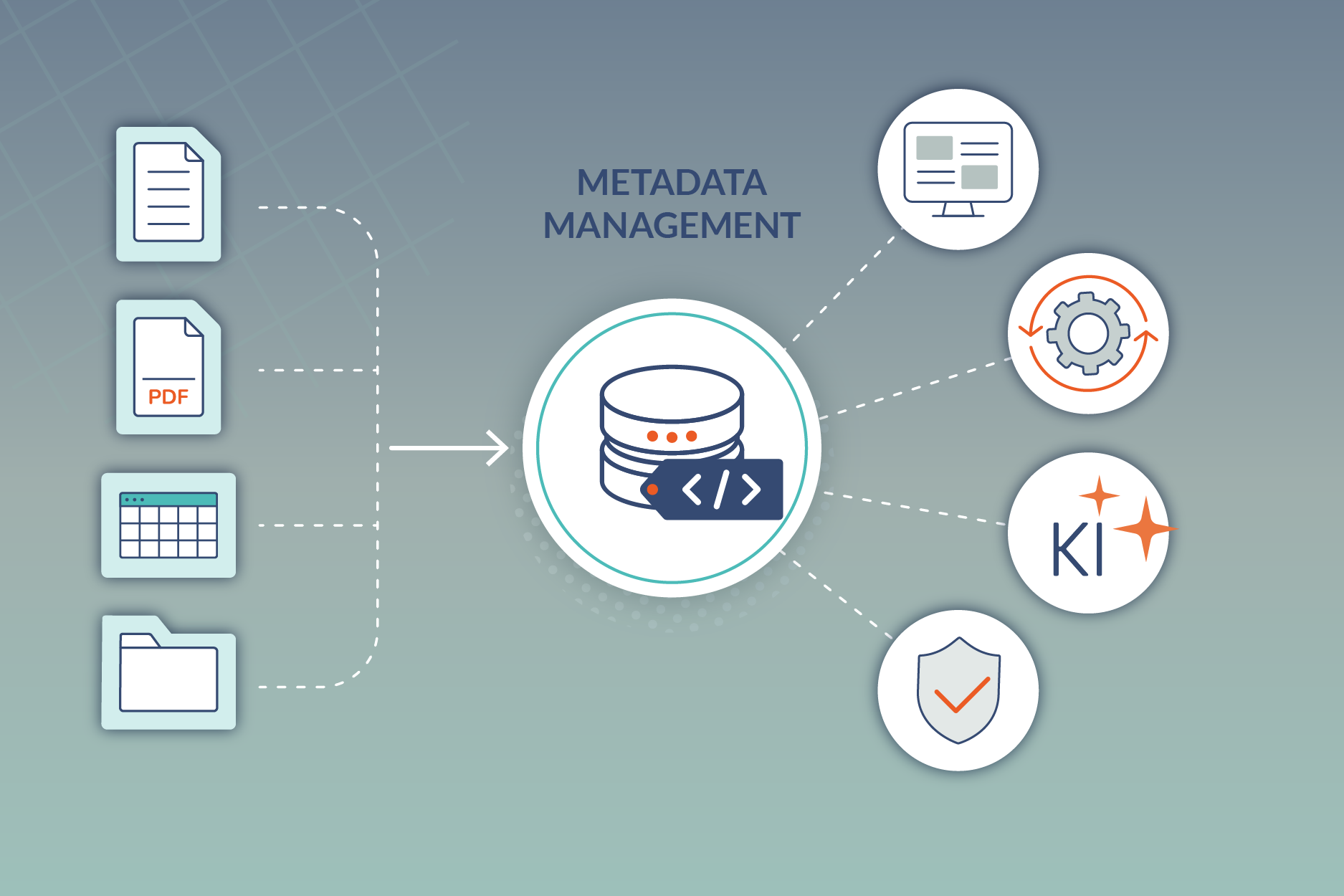
In technical communication, metadata plays a central role: it classifies content so that it can be used systematically. Technical documentation is a key area of application here, but it is not the only one.
Typical metadata describes, for example, product relevance, version, target audience, or security relevance. However, it only truly comes into its own when these elements interact. It can map content to usage scenarios, products, and system contexts and—if the model allows for it—also explicitly represent relationships between these elements.
This enables them to:
- Structured storage and classification of content
- Improved discoverability through search and navigation
- Context-sensitive provision of information
- Reuse of Content Building Blocks
Metadata is therefore a key mechanism not only for creating content in technical documentation, but also for making it readily accessible. Without systematically maintained metadata, discoverability, reusability, and context-sensitive delivery are significantly limited, particularly in larger information repositories.
If you’d like to familiarize yourself with the basics first, you’ll find a concise introduction in the video “What Is Metadata?” as well as a more in-depth explanation in the publication “Metadaten für Einsteiger.” (only in german)
From Document to Content System: Metadata Model and Data Modeling
The transition from document-centered to content-centered communication would be unthinkable without metadata. Content is no longer produced as self-contained units, but rather as modular building blocks that can be recombined depending on the context.
The foundation for this is a suitable content or information model and a metadata model tailored to it. It defines:
- which attributes describe content
- What values are allowed?
- how these are classified
If, in addition, complex relationships between entities are to be modeled, supplementary semantic models are required
The development of such a model is referred to as metadata modeling. It is not merely a technical task, but a core conceptual decision: It determines how information is understood and can later be used within the organization.
A vague or inconsistent model increases the risk of unclear mappings, incorrect outputs, and limited reusability, regardless of the linguistic quality of the content.
Guidance Through Standards and Guidelines: iiRDS and VDI 2770
iiRDS (Intelligent Information Request and Delivery Standard)
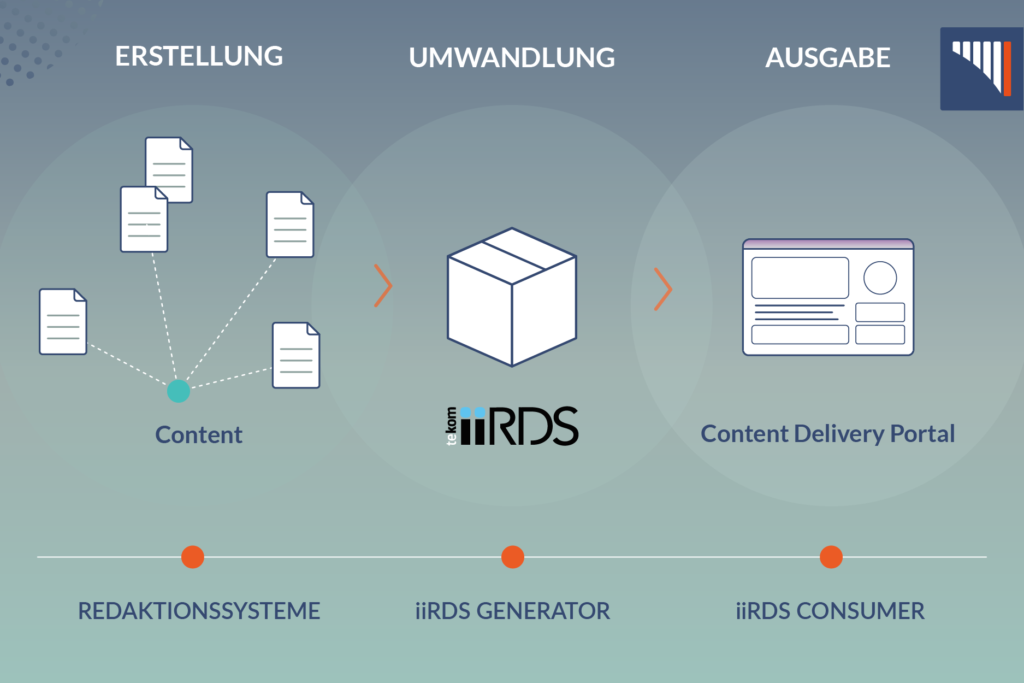
A standard for the exchange and context-dependent delivery of technical information. Among other things, it defines a package format and an RDF-based metadata vocabulary.
Read more about this in our in-depth article on the iiRDS standard and its significance for technical communication.
VDI 2770
A guideline on minimum requirements for digital manufacturer information in the process industry. It supports the standardized and automatable transfer of manufacturer documentation between manufacturers and operators.
The regulations provide both specific guidelines and guidance for company-specific implementations. In practice, they must be adapted to or expanded to account for product structures, processes, systems, and usage scenarios.
An in-depth examination of structured metadata models and their standardization can be found, for example, in the context of iiRDS and in the tekom article on semantic information management.
Feel free to watch the recording of our webinar on this topic. In it, Dr. Martin Ley from PANTOPIX and Jan Grüter from gds use iiRDS and VDI 2770 as examples to explain how metadata standards can help make technical communication future-proof (webinar only in german)
Metadata Management as a Component of Data Quality Management
Metadata management is closely linked to data quality management. Metadata is data in its own right, and its quality has a significant impact on the quality of the processes that rely on it.
When metadata is incomplete, inconsistent, or ambiguous, typical problems arise:
- Content not found
- falsche oder veraltete Informationen werden ausgespielt
- Automation processes produce unreliable results
Conversely, consistent metadata management helps to:
- Ensuring data quality by clearly describing content
- Improving data quality by standardizing structures
- To optimize content in a targeted manner, since its usage can be analyzed
Optimizing metadata goes beyond its initial capture. It is an ongoing process that ensures metadata remains consistent, unambiguously interpretable, usable across systems, and suitable for filtering, combining, and displaying. The key factor is how well it can be utilized within the system. Metadata can be considered “optimized” in particular when it:
- are consistent and standardized
- remain open to a clear interpretation
- can be used across systems
- enable targeted filtering and combination of content
Metadata as a Key Component for Reliable AI Applications
With the increasing use of AI systems, the role of metadata is undergoing a fundamental shift. It is becoming a key foundation for effectively guiding the automated processing of content and better contextualizing results.
Semantic search engines and retrieval-based AI architectures rely on processing content in the proper context. Without structured metadata, two key problems arise:
- Relevant content is not found or is weighted incorrectly
- Generated responses lose precision and reliability
Metadata provides the necessary cues for categorizing content: What information is current? To which product does it apply? In what usage context is it relevant?
A simple scenario illustrates this:
A service technician asks a question about a specific product and a particular version. Without appropriate metadata, a system can still evaluate textual similarity and statistical relevance, but it often cannot reliably take into account product versions, release statuses, or scopes of validity. With well-maintained metadata, it can specifically identify and prioritize the relevant information.
This makes it clear that the quality of metadata can significantly influence the quality of AI results.
The question of whether—and in what form—metadata remains necessary in the age of AI was also discussed in the webinar “Do we still need metadata in times of AI?” by Karsten Schrempp (PANTOPIX) and Jörg Schmidt (RWS Group). The recording offers an in-depth look at the role of metadata in the context of modern AI systems and is available to watch for free.
Dr. Martin Ley and Knowledge Engineer Jonathan Schrempp have also explored the question of how artificial intelligence can function reliably in technical communication. They share their findings regarding metadata and knowledge graphs in the Tekom article “Von Metadaten zu nutzbarer KI” (only in german).
Metadata vs. Knowledge Graphs
Structured metadata is essential for improving the quality of AI responses. But in this context, it is only the first step. Its limitations become apparent when the meaning of a piece of information no longer derives solely from its properties, but rather from its relationships to other pieces of information. This is the case, for example, when different names are used for the same entity, product variants are linked to one another, components are suitable only for certain configurations, or standards apply depending on the market, area of application, and product class.
A question such as “What is the current manual for Product X?” can usually be answered using metadata. The question “Which replacement parts may be used for a specific system configuration in a specific country and are also compatible with the installed software version?” is, however, significantly more complex. Here, information from multiple sources must be correlated. Individual metadata fields are often insufficient for this purpose.
This is where semantic technologies come into play. They model not only documents and data objects, but also entities, concepts, and their relationships. This enables a system, for example, to recognize that a trade name, an internal product number, and a former product name all describe the same entity. Similarly, it is possible to map which component belongs to which system, which version is compatible with which variant, or which rule applies to which context. This creates a machine-readable context layer that enables AI systems to link information more consistently, reduce ambiguities, and provide more transparent justifications for their answers.
A practical rule of thumb is this: If finding the right document is the key to a reliable answer, metadata is usually sufficient. If multiple entities, dependencies, and validity conditions—which reside in different systems—need to be correctly integrated, semantic technologies such as ontologies, taxonomies, or knowledge graphs are required. Taxonomies primarily structure concepts and hierarchies. Ontologies and knowledge graphs are also suitable for formally representing complex entities and relationships.
We explore the growing importance of semantic structures in our podcast on the significance of semantics (only in german), as well as in the article “Semantics in Technical Communication.”
An Exemplary Shift in Perspective: From Fragmentation to Manageability
In many companies, content accumulates over time: different documents, various structures, and inconsistent naming conventions develop in parallel. While the information is available, it is difficult to find, can only be reused to a limited extent, and is often not clearly linked to other information.
A typical scenario: For each new product variant, existing content is copied and adapted. With each iteration, the amount of similar but not identical information increases, and with it, the effort required for maintenance and updates.
With a modular content architecture and a metadata model tailored to it, this situation changes fundamentally. Content is broken down into reusable building blocks and clearly classified.
However, classification alone is often not sufficient for more advanced control. As soon as complex dependencies and relationships between product variants, components, use cases, or target groups need to be taken into account, a semantic layer is required. It describes not only the properties of a piece of content, but also how products, information, and contexts are related to one another.
The result is a controllable information system:
- Content can be filtered and combined in a targeted manner
- Variants can be systematically derived
- Dependencies and validity conditions become machine-readable
- New channels can be managed without having to create new content
The added value, therefore, does not lie solely in better-maintained metadata. It arises from the interplay of modular content, consistent classification, and a semantic layer that explicitly maps relevant relationships.
These principles are evident in various system contexts—such as component content management systems, content delivery platforms, and knowledge platforms—or in the context of product information management, for example, when implementing PIM systems or analyzing semantic layers in PIM.
Areas of Tension: Standardization, Effort, and Governance
Implementing metadata management is less of a technical challenge than a conceptual one. It involves navigating several areas of tension.
A key tension lies between standardization and flexibility. A consistent metadata model requires clear structures and controlled vocabularies. At the same time, editorial teams must remain able to represent new content, products, or use cases. Models that are too rigid lead to metadata being bypassed or used inconsistently.
Another area of tension concerns the effort required for maintenance. Structured metadata can be generated manually or automatically. However, its quality does not arise on its own; rather, it requires clear rules, ongoing maintenance, and professional accountability.
Structured metadata is not generated automatically; rather, it must be deliberately maintained as part of the editorial process. The benefits—such as reusability or automated delivery—often become apparent only after some time has passed. Without a clear understanding of this relationship, metadata is quickly perceived as an additional burden and is not consistently maintained.
Finally, there is the question of governance. Who defines metadata models? Who decides on changes? In many organizations, there is a lack of clear accountability in this area. The result is a gradual loss of consistency or, conversely, such a high degree of centralization that necessary adjustments are blocked.
Successful metadata management involves consciously managing these areas of tension.
From Modeling to Operational Implementation
A metadata model first establishes the conceptual foundation. However, its full benefits are realized only when metadata is consistently available across the participating systems, data is automatically exchanged between these systems, and existing information assets can be efficiently classified and enriched.
Example: Working with Metadata in the PANTOPIX SPHERE Knowledge Platform
PANTOPIX SPHERE demonstrates how these tasks can be integrated into a single platform. The metaSelect app distributes centrally managed metadata and knowledge models to the systems in which information is created or used. This enables a CCMS, a content delivery portal, and other applications to operate on a common semantic foundation.
dataFlow automates the exchange and transformation of data between source and target systems. This allows information to be processed within process chains and made available in the required format. dataEnrich complements this process by automatically analyzing, classifying, and enriching existing structured and unstructured information with metadata.
In this way, metadata management evolves from a primarily conceptual task into a continuous, cross-system process. Models, metadata, and data flows are not managed in isolation, but are embedded in a shared semantic and technical architecture.
Rethinking Quality: Metadata as Part of the System
In modern content management systems, quality stems not only from the content itself, but also from the interplay between content and metadata. A factually accurate text loses its value if it cannot be found, appears in the wrong context, or cannot be clearly assigned to a specific use case.
Metadata expands the traditional concept of quality to include the dimension of usability. It makes subject-matter-accurate content discoverable, classifiable, and available in a context-appropriate manner.
This makes metadata a key factor in information and data quality. It supports the consistent management and use of content and enables its systematic control, whether in automated delivery, variant generation, or use by AI systems.
Quality is therefore no longer a characteristic of individual pieces of content, but rather the result of a well-functioning system.
Conclusion: Metadata Management as a Strategic Foundation for Scalable Information
Metadata management, together with a suitable information architecture and modular content, forms the foundation for scalable content processes, consistent contextual information, and the controlled use of modern technologies such as AI.
It facilitates the transition from static documents to dynamic content systems, lays the groundwork for automation, and improves the reliability of information.
The key implication, therefore, is this: Anyone who wants to ensure data quality, scale content, and make effective use of AI must view metadata management as a core strategic competency and systematically develop it further.

Sandy Hedig
Marketing Manager | PANTOPIX
We will be happy to inform you regularly about new articles, videos or podcast episodes.