




PANTOPIX Consulting Knowledge Graph

Consulting

Knowledge Graph - Connecting company knowledge and breaking down data silos

We advise you on the introduction of knowledge graphs and help you to link information from different systems, data sources and departments in a structured knowledge base – for more transparency, better decisions and intelligent applications.

Many companies have large amounts of product and service information, but it is distributed across different systems and departments. Spare parts and product data in PIM or ERP systems, development information in PLM, service knowledge in support systems or documentation in editorial systems.

This information is rarely interrelated. For employees in service, sales or development, this means that they have to gather information from multiple sources, connections remain hidden and digital applications such as AI assistants or intelligent searches are unable to exploit their full potential.

With the consulting and implementation of a knowledge graph, we accompany you on the way to dissolving data silos, intelligently networking information and introducing structured information management.

Our advice in detail

Our approach to successfully introducing a knowledge graph

When implementing a semantic network, it is no longer a question of whether you want to network your valuable information – the vision has been set and the company’s maturity has been defined. It’s about what the strategic implementation will look like.

We support you in developing a robust concept that takes into account both your data landscape and your strategic goals – and then implementing it.

docker

01 Data analysisand conception

We analyze your data landscape, information flows and existing structures. We take into account which data sources exist in the company (e.g. ERP, PLM, DMS, CRM, knowledge databases, technical documentation, support systems), which formats and structures they have (e.g. XML, JSON, CSV, relational databases, proprietary formats) and where redundancies, breaks or data silos exist.

We also check how existing taxonomies, metadata and ontologies can be used or extended. The result is a semantic and technical architecture on which your knowledge graph project can be based.

Together, we define the strategic goals, key results and the most important use cases for your use of knowledge graphs. We determine which information and departments are included and define measurable success criteria. For example, we use the agile management method “Objectives and Key Results” (OKR).

Our consulting approach ideally combines strategic planning with a practical start: a proof of concept (PoC) with real data makes the potential of such a knowledge presentation immediately visible and lays the foundation for scaling.

The scope of the PoC is clearly limited – for example, a single product or a selected information domain with a limited number of data points. This gives you a quick impression of the key benefits of a knowledge graph: Interrelationships become visible, data from different systems can already be networked and the project idea can be communicated convincingly internally.

We analyze the relevant data sources and metadata. Based on this, we develop the knowledge model (taxonomy, thesaurus, ontology) that links the data with each other and makes the relationships transparent. This model forms the basis for a later, scalable implementation.

The PoC not only provides results, but also insights for scaling up the project. Based on the small project, we create a roadmap for the rollout, including system selection, integration of additional data sources and preparation for company-wide use.

Results

Goals of our practical knowledge graph consulting

Development of a resilient concept that takes your current data landscape and strategic goals into account

Definition of relevant use cases and measurable success criteria

Exemplary implementation of a knowledge model as a scalable PoC with real data

Foundation for scalable AI applications

Derivation of a roadmap with recommendations for action and systems

Support with internal communication and marketing of the project

Video

TOPIX | What are knowledge graphs

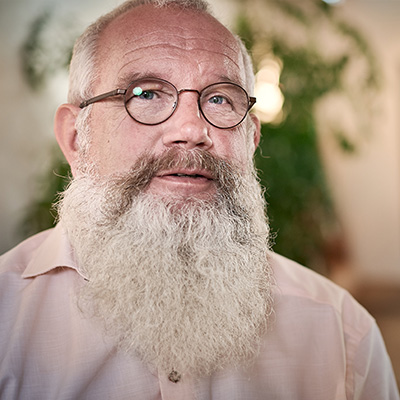
In this video, Karsten Schrempp clearly explains what a knowledge graph is, how this technology works and why it is so important for intelligent information management.

With TOPIX in a minute, we offer you insights into interesting topics relating to the intelligent provision of information in technical communication.

Topix
Knowledge Graph briefly explained

Article

Knowledge graphs for companies

In our article, you can find out more about knowledge graphs, their use and the benefits of a semantic knowledge network for product communication.

Whitepaper

artikelbild whitepaper wissensgraphen

Step by step to the knowledge graph

This white paper uses the example of a pump manufacturer to explain how we transfer product knowledge in tables to networked information in a knowledge graph.

Whitepaper

Artikelbild Whitepaper PANTOPIX SPHERE Wissen vernetzen

Central knowledge for service and sales

In the white paper, we use two practical use cases to show you what the digital provision of information in an intelligent knowledge platform looks like.

FAQ

Frequently asked questions about the use of a knowledge graph

How extensive is a knowledge graph project?

The scope of a knowledge graph project depends heavily on your objectives, the use cases you’re focusing on, and the areas of the company where the knowledge graph will be deployed.
A project can start small—for example, with a clearly defined proof of concept (PoC) for a specific use case or a single information domain—and then be expanded step by step. What matters is not the size at the outset, but rather clear objectives and a scalable approach.

The duration of a proof of concept depends largely on the available resources and the level of cooperation on the client’s side. With close, focused collaboration and the use of a production environment, a PoC can be implemented in about 3 months. If coordination or technical prerequisites take more time, the duration can extend to up to 6 months.

The goal of the PoC is to achieve visible results quickly using real data and to demonstrate the potential of a knowledge graph.

A knowledge graph is fundamentally technology-agnostic and can link all relevant data sources together.
In practice, systems such as CCMS, ERP, PIM, spare parts databases, and other authoring, media, or content management systems (e.g., MAM, DAM) are frequently integrated.

What matters is not the individual system, but the ability to consolidate information from different sources into a shared semantic structure and establish relationships between them.

A key requirement is having a clear goal of providing users with information from various sources in a targeted and context-sensitive manner. In addition, the company should follow a digitalization strategy, view knowledge management as a strategic priority, and consider semantic methods as an important foundation—complementary to AI.

Perfect data is not a prerequisite here. More important is the willingness to analyze existing structures and improve them step by step.

A successful knowledge graph project is inherently interdisciplinary. Typically, the following roles are involved: information providers (e.g., from editorial, customer service, and product management), information architects, enterprise or solution architects, and business users of the future applications.
This combination ensures that both business requirements and technical implementation, as well as the user perspective, are taken into account.

The most sensible way to begin is with a clearly defined, goal-oriented proof of concept (PoC). This involves implementing a concrete use case with real data, for example for a product, an information domain, or a specific use case.

This allows you to quickly demonstrate added value, build internal buy-in, and develop a solid foundation for future scaling.

Your question is not listed?

We are happy to answer all open questions personally and without obligation.

Together, we unlock the full potential of your knowledge.

Contact person

Our expert for knowledge graphs

Karsten Schrempp

Managing Director

Search

Search