



PANTOPIX Anwendung PIM-Systeme mit Knowledge Graph Wissensbasis für vernetzte Informationen
PANTOPIX application PIM systems with Knowledge Graph Knowledge base for networked information

Use Cases

PIM systems for companies - connected product information instead of data silos

The combination of PIM system and Knowledge Graph enables the truly intelligent use of your product knowledge.

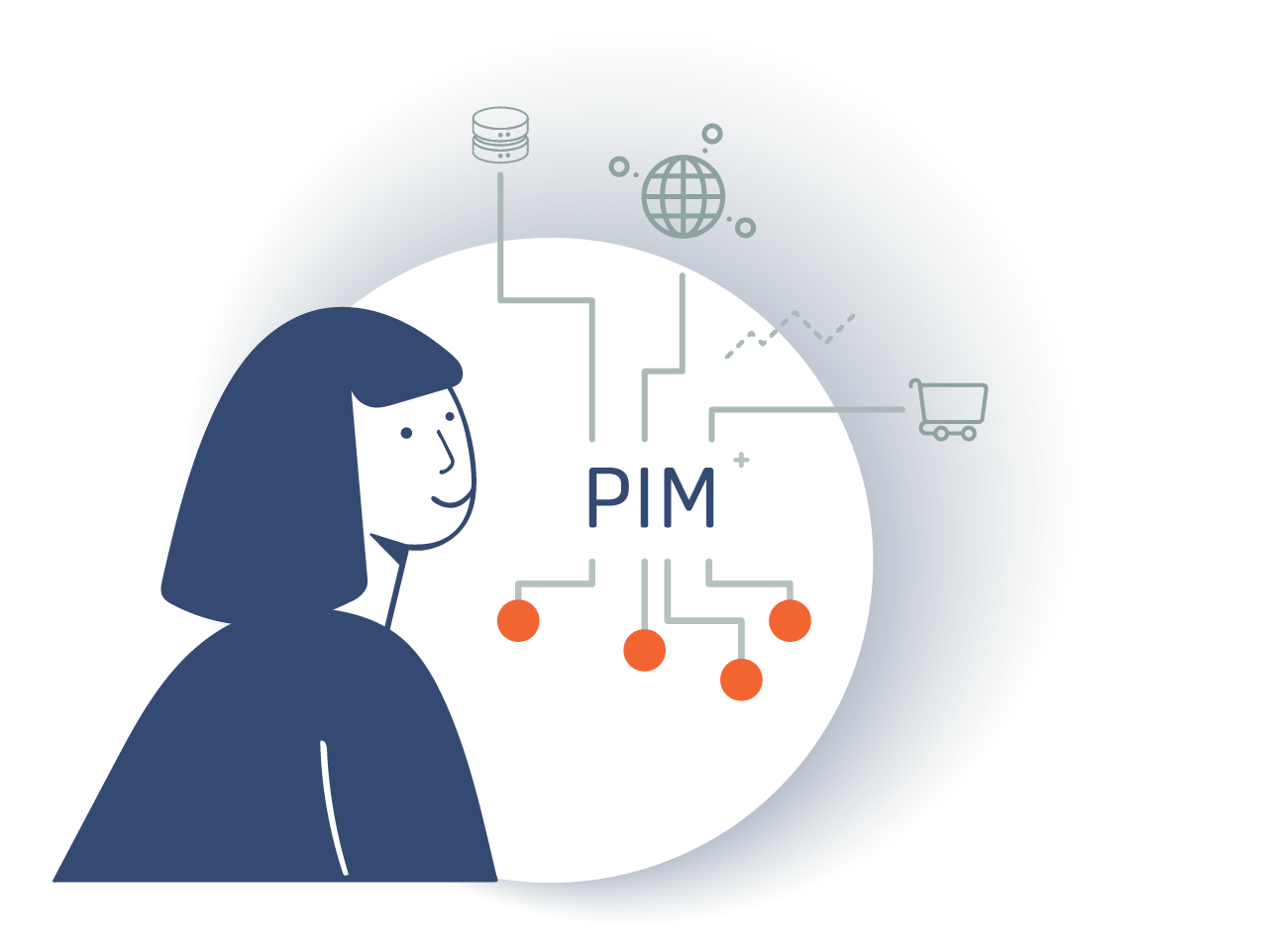
A modern PIM system can do more than just manage product data centrally. In a networked information landscape, it acts as an essential hub and significantly optimizes product data management.

By connecting to a knowledge graph, product information is not only stored, but also put in relation to each other. Products, variants, components, documents, media, target markets and applications are semantically related.

This intelligent networking creates context. Information becomes understandable, findable and machine-usable. The PIM system thus becomes part of a holistic knowledge structure and is more than just another data silo.

Orientation

What is a PIM system and who needs it?

A PIM system is used for the central, structured management of product-related information. It is not a replacement for an ERP system that manages commercial product master data or for a CCMS in which technical documentation is created. Nor is it a system for delivering technical information as required (content delivery).

Not every company needs a PIM system right away. However, as soon as product diversity, variant logic, international markets or digital channels increase, the structured management of product information becomes strategically relevant.

Companies usually notice this growing complexity in their product information because data has to be maintained multiple times, reconciliations take more and more time or variants are difficult to manage.

Grafik Vorgehen PIM PANTOPIX
PANTOPIX SPHERE Wissensmanagement Software Grafische Darstellung

PIM reimagined

Semantic connection of product information

A PIM system is helpful, but as product complexity increases, even a classic system with traditional data structures will eventually reach its limits. Variant relationships, dependencies and contexts can only be mapped to a limited extent in hierarchical models.

If product information is to be used strategically, it needs more than central storage, namely structural networking. This can be created if the PIM system is connected to a knowledge graph.

PANTOPIX & PIM

We design information architectures that enable growth

For us, a PIM is not an isolated software project, but part of a holistic information architecture. The decisive factor is not the selection of a tool, but the sustainable structure of your product information.

We combine PIM systems with semantic technology and knowledge graphs to make product information scalable, consistent and usable in the long term.

The result is not another data silo, but a scalable structure that supports growth, variant diversity and new business models in the long term.

Our approach includes:

Development of a strategic target image

Definition of the future information architecture.

Analysis of your existing system landscape

Evaluation of your data, processes and systems in interaction.

Modeling of product structures and relationships

Mapping of complex variant and dependency logic.

Conception and structure of a knowledge graph

Creation of a semantic layer.

System integration and data migration

Technical connection and quality-assured transfer of your data.

Governance and organizational enablement

Sustainable anchoring of processes, roles and responsibilities.

Benefit

Advantages of connected PIM systems for companies

The intelligent connecting of information ensures that knowledge is not lost within the company, but can be used and further developed in a targeted manner. Thanks to its knowledge graph connection, the PIM system becomes a central component of a sustainable content and knowledge strategy.

Transparent correlations instead of isolated data records

Products, variants, components, documents, markets and applications are explicitly related to each other and can be traced at any time.

Cross-system data maintenance

Adjustments to products or components are consistently taken into account in all linked information and output channels.

Better collaboration across departmental boundaries

Everyone involved works with the same knowledge base, regardless of whether they come from product management, marketing, sales or service.

Higher quality and consistency of product communication

Complete, up-to-date and consistent information along the entire customer journey.

Future-proof basis for automation and AI

Structured and semantically linked data enables intelligent searches, automated extraction and AI-supported applications.

Improved competitive analysis

Knowledge graphs enable detailed tracking of competitors' product offerings, which can be integrated directly into the PIM system.

Business Use Case

Product navigator for sales with PANTOPIX SPHERE

Sales often face the difficult and time-consuming task of collecting product offer information from various sources. In addition, competitors’ product offerings must be tracked manually on various external websites. This complexity makes it difficult to find information quickly and has a negative impact on strong customer relationships and competitiveness.

A PIM system with Knowledge Graph at its heart integrates product information from different data silos in one central location. This creates a product navigator that serves as a central access point to all relevant information and meets the specific needs of the sales team.

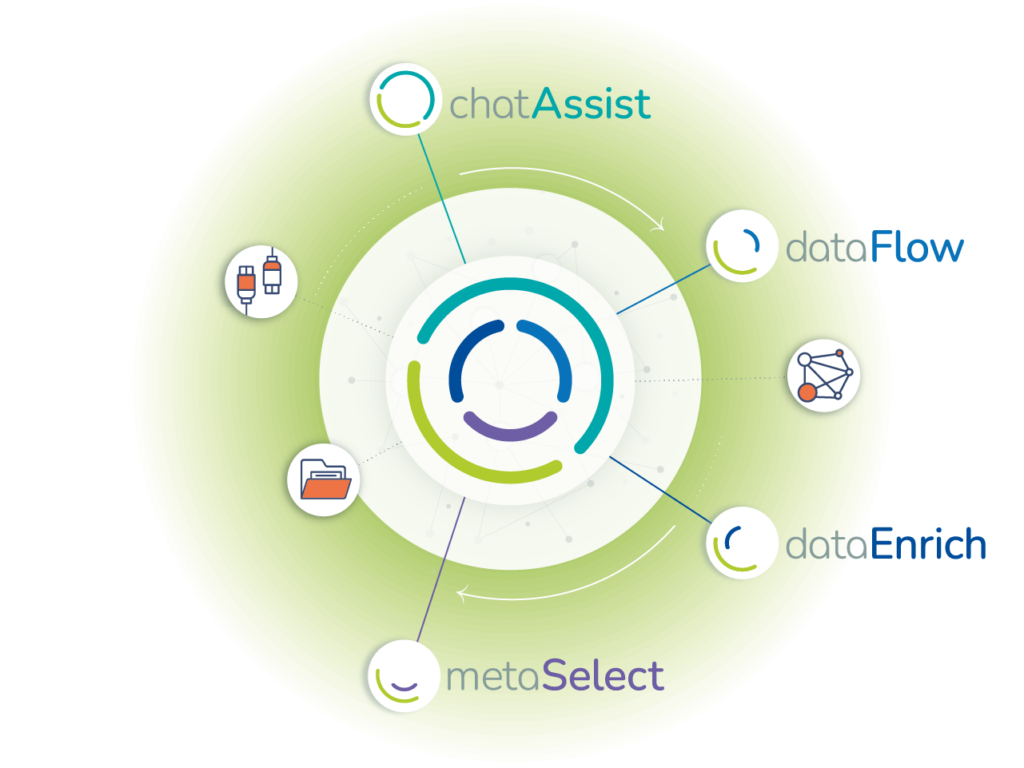
Such a sales solution can be technically implemented with an intelligent information platform such as PANTOPIX SPHERE. This knowledge management software uses semantic technologies and modern AI methods to provide reliable information for various applications.

Graphic PANTOPIX SPHERE components

Video

How knowledge graphs are changing traditional PIM systems

Learn what a PIM system is and how it helps to manage product information across channels. We discuss the key challenges faced by traditional solutions, such as data silos and scalability issues, and show how Knowledge Graphs improve data connections, increase flexibility and enable smarter product data management.

FAQ

Frequently asked questions about connected PIM systems

What are the requirements for a PIM system today?

The requirements for PIM systems have changed considerably. Nowadays, it is no longer just about the central management of product data. A modern PIM system should be able to display complex product structures, integrate different types of information and make it available depending on the context. These demanding requirements can only be met to a limited extent by traditional, purely data-based approaches to product data management.

A mere comparison of PIM systems based on function lists often falls short. Many systems are similar at first glance, but differ greatly in terms of their flexibility, expandability and integration capability.

A comparison makes sense if it is based on a clear objective. Which information landscape should be supported in the long term? How complex are the products, variants and dependencies? What role do context, relationships and automation play? Without clarifying these questions, there is a risk of selecting a system that works in the short term but quickly reaches its strategic limits.

At PANTOPIX, we don’t start by selecting a system, but by analyzing your information strategy. We look at your existing product data landscape, your processes and your future requirements. The aim is to create a sound basis for decision-making and to develop a PIM concept that is sustainable in the long term.

PANTOPIX combines a deep understanding of product information with many years of experience in modeling complex knowledge structures. We do not think of product data management and therefore also PIM systems in isolation, but as part of a networked information strategy.

Our strength lies in the semantic modeling of product knowledge, the implementation of knowledge graphs in real corporate contexts and the integration of PIM systems into existing IT and process landscapes.

Our focus is on sustainable and expandable solutions rather than short-term implementations. We work on PIM solutions that also support future requirements such as automation, personalization and AI.

Your question is not listed?

We are happy to answer all open questions personally and without obligation.

Together, we unlock the full potential of your knowledge.

Contact person

Our expert for connected PIM systems

Maximilian Gärber Technical Consultant PANTOPIX

Maximilian Gärber

Technical Consultant

Search

Search