13. August 2024
Overview: Why product information management systems (PIM) are reaching their limits today
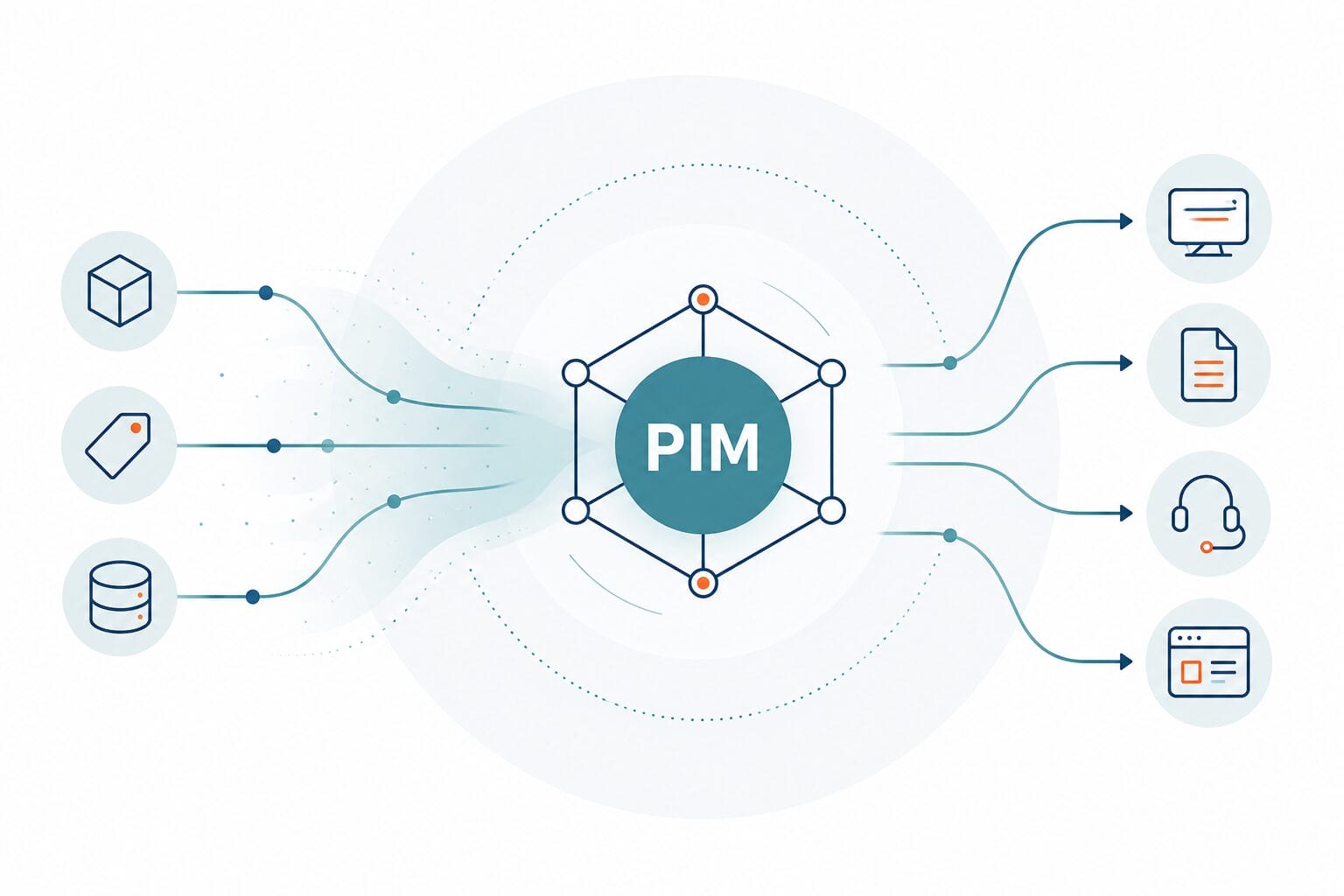
Companies rely on product information management (PIM) systems to create, manage and distribute product information through various channels.
PIM or product information management refers to the systems used to manage and centralize product data and information within a company.
PIM systems are essential for companies, especially those with extensive product catalogs, to ensure consistent, accurate and up-to-date product information across different channels and platforms.
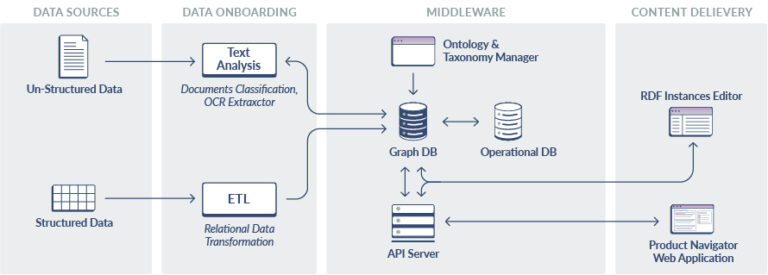
At PANTOPIX, we look at how a knowledge graph for PIM can help to better structure product data, in particular through semantic layers, which are presented below.
These challenges can be addressed with a knowledge graph for PIM:
Conventional PIM data packages can only meet today’s data management requirements to a limited extent:
- They lack a single source of truth, which makes it difficult to integrate different data sources and break down data silos.
- They are not flexible enough to accommodate new data sources, attributes or channels and require significant rebuilding to integrate new product data from competitors.
- They hinder effective data sharing and cross-domain insights; they often operate within domain-specific boundaries and limit the ability to publish, share and exchange data while maintaining quality and gaining comprehensive insights across different domains.
The use of a knowledge graph (KG) for PIM systems solves these problems and offers a more flexible, integrated and holistic approach to data management.
Structure of semantic layers: This is what a knowledge graph for PIM systems looks like
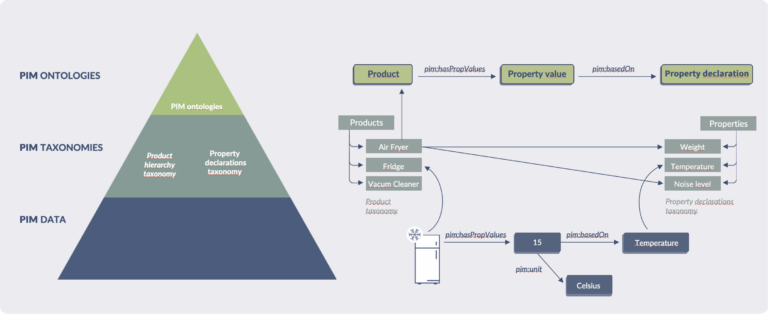
The Knowledge Graph is divided into three semantic layers:
PIM ontology layer
The top layer provides a semantic understanding of the data by defining relationships and concepts. In the PIM ontology layer, for example, the property “temperature” of a refrigerator could be linked to the concept “unit of measurement”.
This layer enables advanced features such as cross-functional insights, allowing companies to analyze data across different product categories and uncover patterns or trends that may not be visible in isolated data sets.
Another key benefit is flexible schema integration, as the ontology layer allows the system to incorporate new data sources and attributes without major redesign. For example, if a new type of smart appliance with unique properties is introduced, the ontology layer can seamlessly integrate this data while maintaining the integrity and coherence of the entire knowledge graph.
PIM taxonomy layer
This intermediate layer categorizes and organizes the data into structured taxonomies that group together similar products and features. For example, fridges, deep fryers and vacuum cleaners would be organized under a “household appliances” category with subcategories for different types and brands.
This structure supports various use cases such as improved instance creation, where new product entries can be added more efficiently by following predefined categories and attributes. It also helps with the validation of knowledge graph instances and ensures that new product data conforms to established standards and formats.
In addition, taxonomies allow inferences to be made so that the system can derive new information based on existing data, e.g. suggestions for compatible accessories or related products. Another benefit is the improved information search, as users can more easily search and filter products based on well-defined categories and attributes, which improves the overall user experience.
PIM data layer
This layer represents the PIM data using the data model predefined by the ontologies and the concepts defined by the taxonomies. For example, the PIM data layer for a product such as a refrigerator would contain detailed specifications such as model number, dimensions, weight, energy performance, capacity and features such as built-in ice machines or smart technology.
This layer ensures that all product information is captured comprehensively, resulting in comprehensive and detailed product information. By consolidating this data, companies can ensure that they have a single, consistent source of truth for all product details, which is critical to maintaining data accuracy and reliability.
The data instances in this layer are actual representations derived from the ontologies and reuse concepts from the taxonomies, ensuring consistency and semantic richness of the dataset.
By leveraging these three semantic layers, a knowledge graph for PIM systems ensures that product data is not only organized, but also meaningful and applicable. This approach facilitates better data management, improves the ability to derive insights and supports more effective decision-making processes across the organization.
We are happy to support you with your PIM project. Simply contact us with your questions!
Conclusion
By leveraging these three semantic layers, a knowledge graph for PIM systems ensures that product data is not only organized, but also meaningful and applicable. This approach facilitates better data management, improves the ability to derive insights and supports more effective decision-making processes across the organization.
We are happy to support you with your PIM project. Simply contact us with your questions!
Dr. Amir Laadhar