



PANTOPIX Implementation Consulting Agentic AI GraphRAG Knowledge Graph

Implementation

Agentic AI + Knowledge Graphs: The next step towards intelligent systems

We develop intelligent applications that combine agentic AI with knowledge graphs. This creates systems that make context-based decisions, actively control processes and at the same time remain comprehensible and controllable.

Opportunities

Why Agentic AI reaches its limits without knowledge graphs

Companies are increasingly using AI, but many applications remain reactive and isolated. Agentic AI goes one step further and enables systems to understand, plan and execute tasks independently.

This raises the question for many: Why do we still need knowledge graphs if AI seems to understand everything?

The answer lies in reliability. Language models can generate content, but without a structured knowledge base, there is no clear basis for comprehensible decisions.

Without a semantic basis, agent systems also remain susceptible to imprecision and difficult to control. Only on a stable knowledge base can systems act contextually, make well-founded decisions and be reliably integrated into existing processes.

Typical initial situations

Typical challenges

Agentic AI in detail

From initial use cases to agent systems

We support companies in the introduction of agentic AI, always in conjunction with a stable semantic foundation. Our approach combines agent systems with knowledge graphs and ensures that technological possibilities, data structures and organizational reality are brought together in a meaningful way.

Grafik Vorgehen Agentic AI PANTOPIX

01Target definitionand maturity assessment

It doesn’t start with the technology, but with the question: Which tasks should be delegated sensibly and which should not? Not every process is suitable for Agentic AI. A realistic start reduces risks and creates acceptance, especially if the necessary knowledge base is considered at an early stage.

We consider:

  • Specific use cases and their benefits
  • Existing data and knowledge structures
    Process and data quality
  • Organizational requirements

Agentic AI requires a robust knowledge base. Knowledge graphs and ontologies create the semantic structure that is necessary for agents to make context-based and reliable decisions. Without clean data models and clear structures, agent systems also remain ineffective.

We analyze:

  • Existing workflows and decision logics
  • Data availability and quality
  • System landscapes and integration capability

On this basis, we develop agent systems that not only work, but are controllable, traceable and resilient. AI governance is an integral part of the architecture.

  • Definition of clear roles and responsibilities of agents
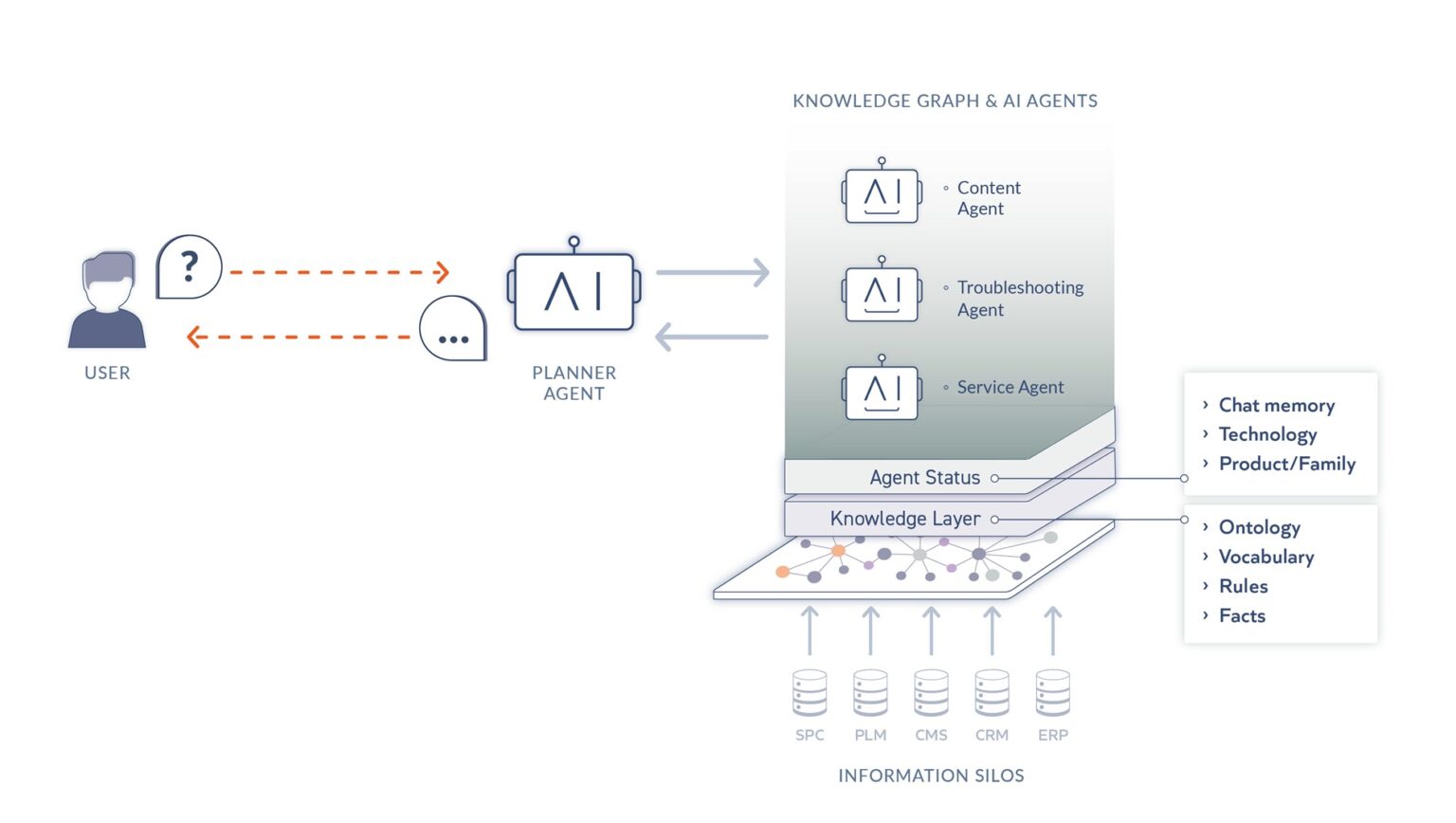
  • Use of a central orchestration agent that plans tasks in a structured manner and coordinates specialized agents (“Plan and Execute”)
  • Design of clearly defined scope for decision-making and action for each agent
  • Integration of control mechanisms such as human-in-the-loop and validation steps
  • Use of knowledge graphs, ontologies, rules and facts to validate decisions
  • Ensuring transparency and traceability through structured decision-making logic and monitoring

Agents actively intervene in processes and systems. The requirements are correspondingly high. We take care of:

  • Access controls and authorization models
  • Securing API and system interactions
  • Monitoring and logging of decisions and actions
  • Compliance with regulatory requirements

Agents unfold their benefits through interaction. We therefore rely on gradual scaling.

  • Coordination of several agents (multi-agent systems)
  • Integration into existing platforms (CMS, PIM, service systems)
  • Combination with knowledge graphs and data models

The success of Agentic AI is not only determined by technology. The people who work with it are a key factor. Acceptance is created through transparency, benefits and control.

Part of our service is therefore:

  • Involvement of specialist departments and users
  • Clear communication of roles between people and the system
  • Training and enablement of the teams

Results

Goals of our integration of Agentic AI

Improved response quality through context-based information processing

Greater reliability of AI decisions thanks to semantic basis

Transparent and comprehensible decisions

Controlled automation of complex processes

Relieving teams without losing control

Foundation for scalable company growth

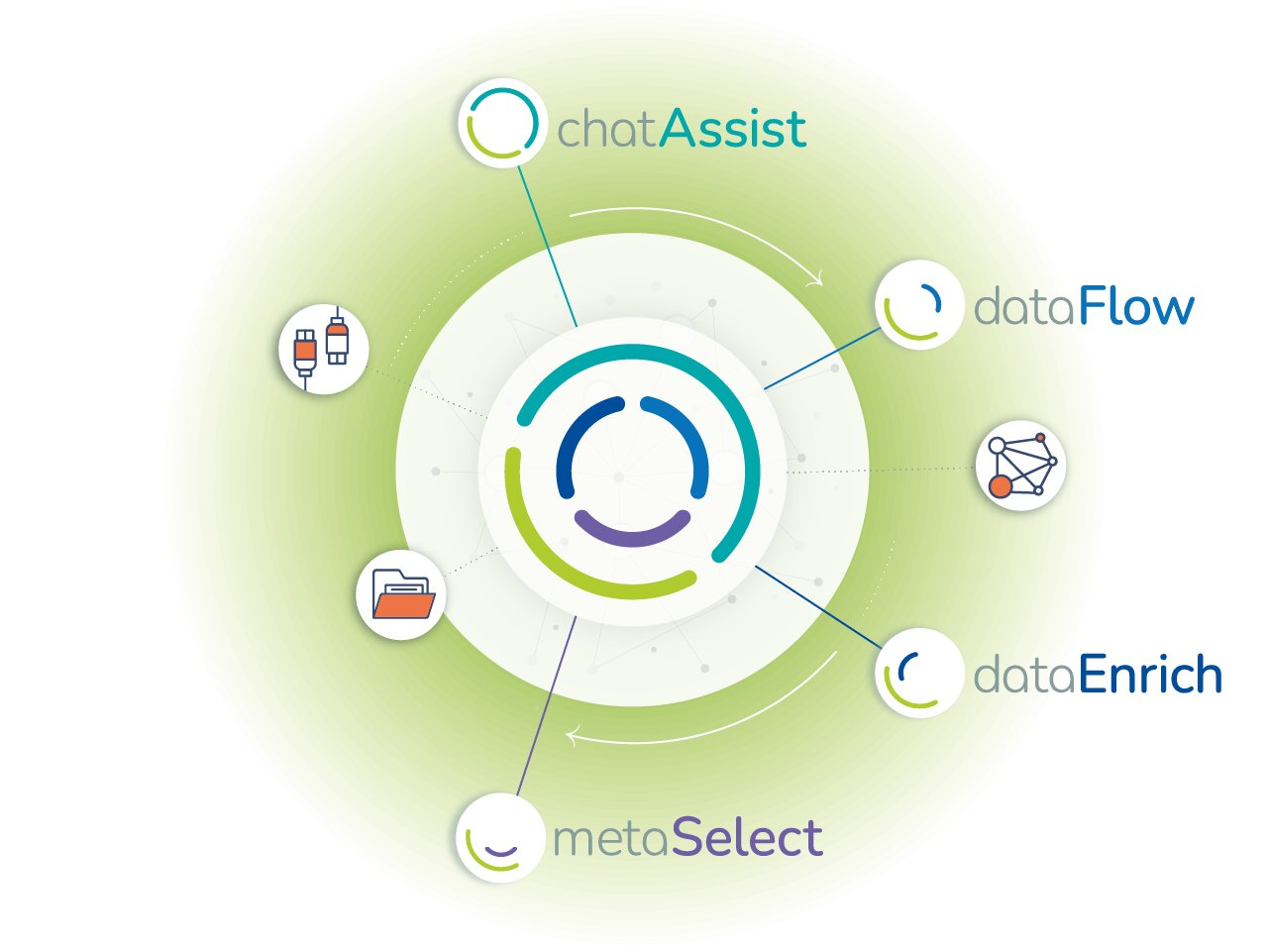
Graphic PANTOPIX SPHERE components

PANTOPIX SPHERE

Integration platform for agentic AI and semantic knowledge models

PANTOPIX Sphere forms the technical and conceptual basis for merging agent systems and knowledge graphs. The platform enables structured integration into existing systems and creates the basis for reliable, scalable applications.

Use cases

Added value that Agentic AI creates in everyday life

  • Automated but controlled content processes
  • Intelligent assistance in service and support processes
  • Proactive decision support
  • Orchestration of complex, cross-system workflows
  • Relief from knowledge work with simultaneous transparency
Grafik Vorgehen Agentic AI PANTOPIX
ZEISS Agentic AI Figure

Practical example

Agentic AI in service at ZEISS

A concrete example of the use of agentic AI is the Service Copilot from ZEISS. The assistance system combines a knowledge graph as a semantic basis with an agent-based AI architecture.

Instead of isolated AI responses, a central agent orchestrates several specialized agents to resolve user queries in a structured manner.
The result: context-based, comprehensible responses and significantly more efficient service processes.

More than 1000 users now access a shared, intelligent service platform – with measurably improved service quality and higher customer satisfaction.

Our toolbox

We build reliable agentic AI on a semantic basis

LLM-based agent frameworks

Frameworks such as LangChain or AutoGen form the basis for the development and control of agent systems.

Model Context Protocol (MCP)

Standard for the structured integration of tools, data and context in agent systems.

APIs and operational system functions

Interfaces and services enable agents to carry out operational actions in existing systems.

Knowledge graphs and semantic models

They form the semantic knowledge base and provide context, structure and clear connections.

Orchestration platforms for multi-agent systems

Platforms for coordinating several specialized agents and controlling complex processes.

Monitoring, logging and governance solutions

Tools for monitoring, traceability and control of decisions and system behavior.

Together, we unlock the full potential of your knowledge.

Contact person

Our expert for Agentic AI

Maximilian Gärber Technical Consultant PANTOPIX

Maximilian Gärber

Technical Consultant

Search

Search