08. June 2021
What is PIM? Definition of product information management
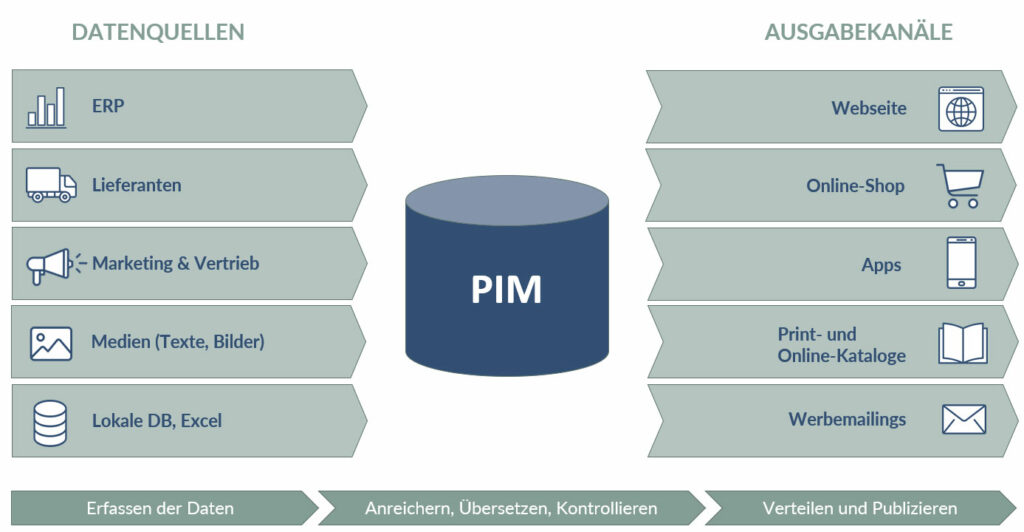
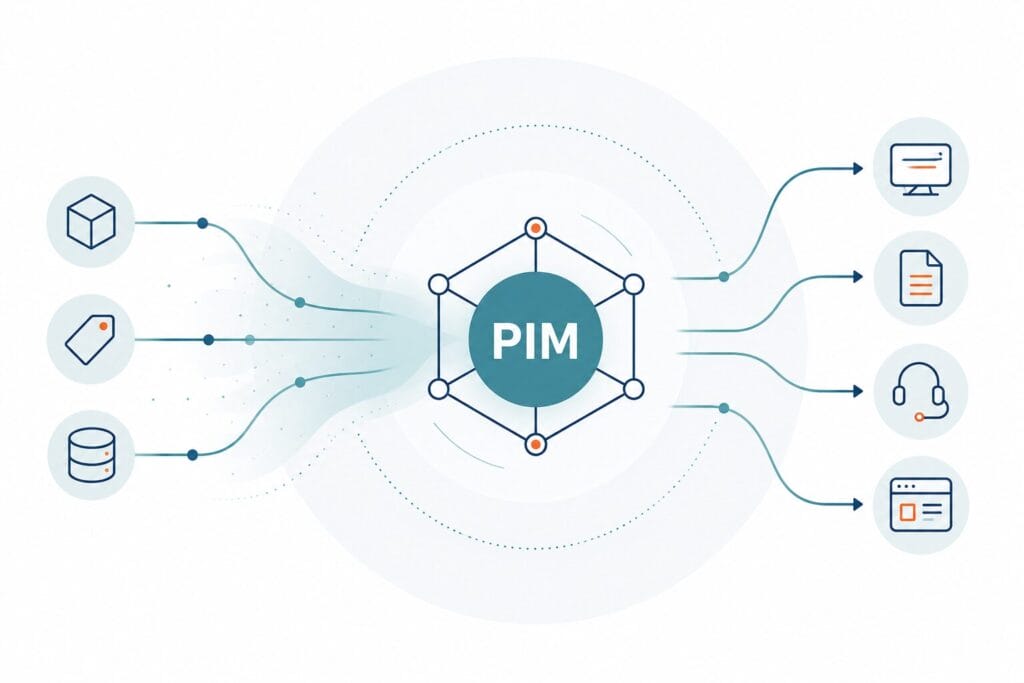
PIM initially means Product Information Management and includes the management and maintenance of product information. Product information is often not stored centrally in companies, but is distributed in different systems. In a PIM system, all relevant product data is managed centrally and stored or referenced in a media-neutral manner in order to make the data available for various output channels. PIM therefore refers to both the management of the data and the underlying infrastructure – i.e. processes and technology.
Areas of application of a PIM system in the company
As soon as product information is to be published in different output media in a company, it makes sense to manage and maintain this data in a PIM system. This ensures that all publications use the same database in the event of an update (single-source-of-truth).
Typically, a PIM system integrates data from an enterprise resource planning (ERP) system, manufacturer data, sales and marketing information, and data from text or asset/MAM databases. The data is consolidated, translated, and verified in the PIM system and made available for the various output channels. This allows consistent product data to be made available on the website, in the online store, in promotional emails, in mobile apps, in product documentation, and in both print and online catalogs.
. There are numerous output media options, and they are scalable.
How does a PIM system work?
Product information management is not just another building block in your company’s IT landscape, it also takes your information management to a whole new level. Interfaces (APIs) between all existing database systems are essential so that product data can be called up and processed for various purposes in individual departments regardless of the platform. This makes the PIM system the central access point for all relevant product information.
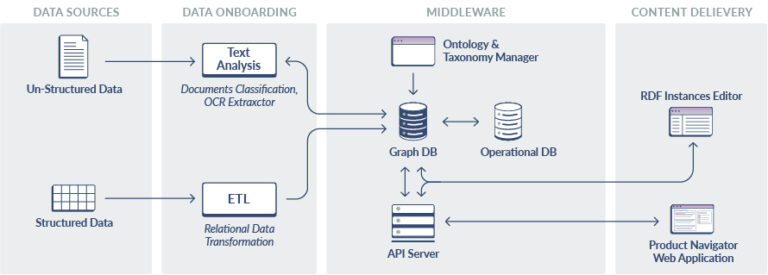
However, traditional PIM systems reach their limits when product information needs not only to be managed centrally but also to be semantically linked and made usable within its context. Here, a knowledge graph extends the PIM by establishing relationships between products, components, documents, applications, and other information objects. Learn more in our article, “Knowledge Graph for PIM: How Semantic Layers Structure Product Data.”
Tasks and advantages of a PIM system
A PIM system is the key technology for better interlinking and processing of product information. In this way, optimization potentials can be exploited and a significantly better customer orientation can be achieved.
The introduction of a standardized PIM system offers numerous advantages for companies:
- Less effort for data maintenance and therefore high efficiency and resource conservation: product data and changes are entered once centrally and are available to all departments.
- The quality of the database is significantly improved and secured.
- Products and offers can be presented in a target group-oriented manner in a wide variety of sales channels without significant time expenditure.
- Publications such as catalogs or theme worlds can be created much more easily. Thanks to process automation, catalog updates can be carried out quickly and easily.
- Internationally active companies can easily translate product data and marketing texts into all required languages using structured data.
- Advantages in search engine optimization thanks to a large database and detailed information options.
In principle, a PIM system can therefore optimize numerous processes. The time required for data searches and data processing is reduced enormously and, at the same time, all departments in the company can build on a significantly better database. The simultaneous output of information to different channels in different languages is no longer a problem, making it much easier to address individual target groups
PIM in the Context of a Networked Information Landscape
PANTOPIX does not view PIM in isolation, but rather as part of an interconnected information landscape. We help companies model product information in a structured way, integrate systems effectively, and prepare data so that it can also be used for semantic applications and knowledge graphs. These include, among other things, analysis, data modeling, system selection, migration, and integration.
You can find out more under PIM systems for companies.

Maximilian Gärber