11. December 2025
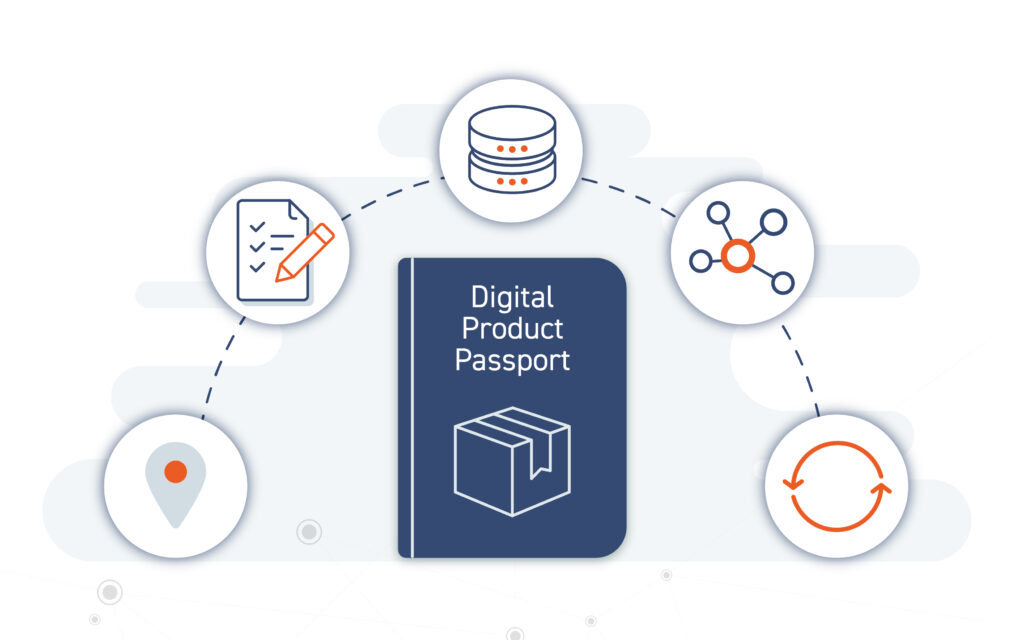
The Digital Product Passport (DPP) is the digital identity for a physical product. In the future, it will be a central instrument containing detailed information on the materials, components, reparability, spare parts and disposal of a product. Pooling data from all phases of the product life cycle, from production to recycling, is intended to strengthen the circular economy, ensure greater transparency and help make products more sustainable. Its gradual introduction is planned from 2027.
“However, many companies are still skeptical about this digital solution,” concludes a joint survey of more than 1,500 companies in Germany conducted by the Federal Environment Agency (UBA) and the Federal Network Agency (BNetzA). “Around half of the companies surveyed associate the digital product passport primarily with more bureaucracy and rising costs.”
DPP as an opportunity for digital business models
This sentiment comes as little surprise, particularly because product data in many companies is often still scattered in isolated information systems and is often not standardized. A Herculean task that the legislator has come up with again! However, anyone who sees the digital product passport merely as an annoying legal obligation or another data collection project is not exploiting the potential of this instrument. What is needed is a change of mindset: away from problem thinking and towards a future-oriented attitude that sees the DPP as an opportunity to drive forward the digital maturity of the company. The real added value lies in creating an information landscape in which data is no longer just collected, but used strategically.
Companies that make this change of perspective will quickly realize that there is enormous potential for innovation behind the regulatory obligation. The DPP forces the structuring, standardization and networking of technical information – precisely the prerequisites needed to provide information intelligently. Those who actively pursue this path will create the basis for sustainable transparency, data-driven services, customer-centric information offerings and ultimately for the competitiveness of the company.
From data silo to knowledge network
To ensure that the digital product passport does not become just another data container, companies need to rethink their information strategy. In most organizations, product information is distributed across numerous systems – PIM, ERP, CMS or supplier databases – and follows different logics and conceptual worlds. This fragmentation prevents knowledge from being used as a whole. The way out of this situation is through semantic technologies: Knowledge models in the form of ontologies and thesauri represent company knowledge. Knowledge graphs connect data sources. This creates a living information landscape in which relationships between data become visible and machine-readable. This transforms isolated data into networked, interpretable information that can be used by data-driven applications: from digital product passports to digital twins and predictive maintenance.
A key aspect is the future viability of this data architecture. Knowledge graphs inherently offer scalability and interoperability. They create a common semantic basis through which data from different systems can relate to each other – regardless of their origin or structure. This creates a stable bridge between systems such as PIM, ERP, CMS or CDP. Such a strategy of networked data makes the digital product passport expandable in the long term and connectable for future requirements.
Intelligent information provision is not rocket science
In order to use the valuable information for the digital product passport and other data-driven applications, a system is needed that links and structures information in context and outputs it in the right form. This is precisely where PANTOPIX SPHERE comes in. The knowledge platform makes it possible to manage complex product information centrally and provide it automatically for different target groups and applications – regardless of whether the output channel is a customer portal, a service app or the DPP itself.
“We have been developing innovative information systems for a very long time and creating AI-based solutions to provide up-to-date product information in a standardized and automated way,” says Maximilian Gärber, explaining the intention. “The core of this solution is a knowledge graph that maps company-specific knowledge as a single source of truth.” This creates an environment in which data is not only stored, but also understood. Content from various sources is captured, semantically linked, enriched with metadata and dynamically displayed. This makes information precisely and efficiently accessible for every application. Be it for technicians in service, for sustainability reports or for regulatory requirements.
Preparing for the DDP therefore brings many overarching benefits for a company, such as
- Centralization of knowledge
- Networking of information
- Automation of processes
- Intelligent information products
- Improved customer satisfaction (service, partners, end customers)
- Increased future security and competitiveness
In this context, the DPP becomes a visible expression of a holistic information strategy: it is one of many possible channels through which knowledge is disseminated in a targeted manner. It is not a cost driver, but an innovation driver that motivates companies to structure and maintain their database and position themselves for the future.
DPP Cheat Sheet
The following contents are required by law for the digital product passport:
- Unique product identifiers
- Certificates and conformity documents
- Materials and substances contained (including hazardous substances)
- CO₂ footprint and environmental impact
- Repair and maintenance information
- Operating instructions and disposal instructions

Sandy Hedig