Agentic AI + Knowledge Graph: How AI works in the Service Copilot from ZEISS
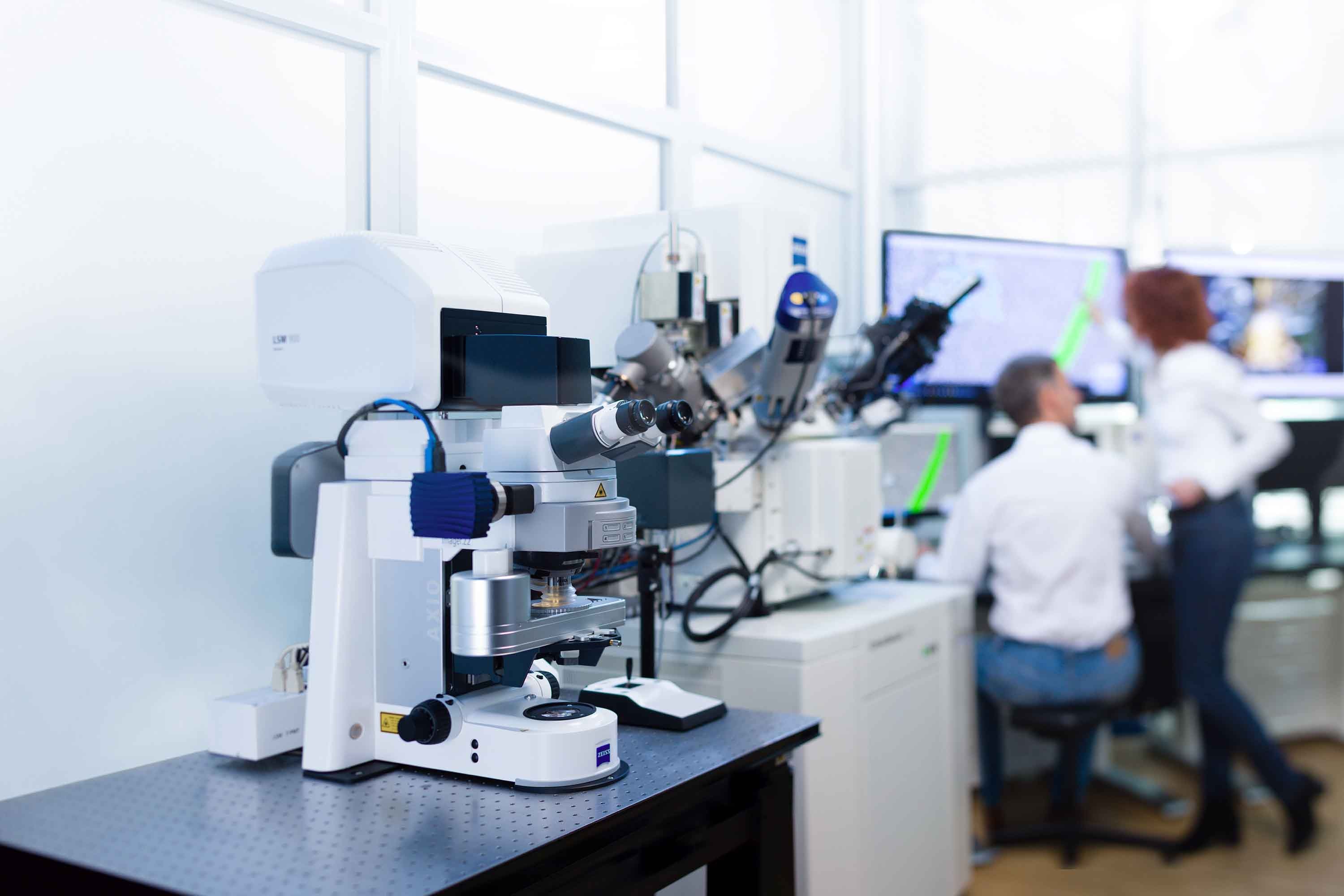
Photo: ZEISS
The Service Copilot is an assistance system that supports ZEISS RMS service teams in their work by providing intelligent information. It combines a knowledge graph as a single source of truth with artificial intelligence.
User feedback has been overwhelmingly positive: instead of spending time searching for information across numerous different systems, employees at all support levels now use the same intelligent service app. And thanks to its specialized IT architecture, the app provides context-based answers that significantly improve service quality and customer satisfaction.
The Service Copilot was developed in very close cooperation with ZEISS Digital Partners (ZDP). The PANTOPIX development team provided both advice and support in the development of the front and back end of the application. PANTOPIX contributed its proven expertise, particularly in the agent setup for AI-based systems.
Semantic basis for Agentic AI
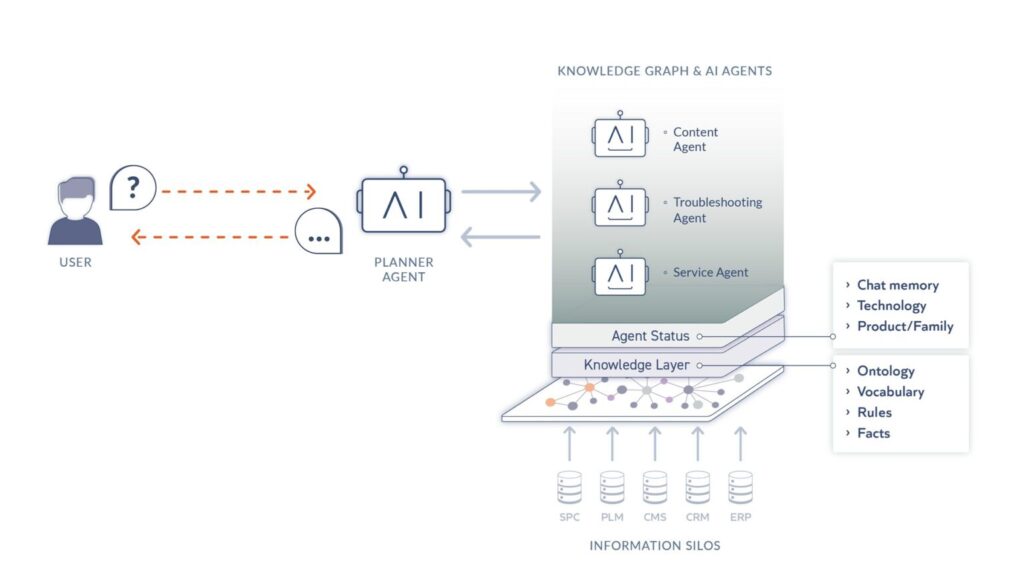
At the heart of the ZEISS Service Copilot lies its semantic foundation: The Knowledge Layer comprises a knowledge graph—including a data model for the entire system—as well as rules and facts that govern the behavior of the artificial intelligence within the system.
AI here does not just mean a large language model (LLM) alone, which generates generic and therefore potentially unreliable answers. An agentic AI architecture with an orchestrating agent at the center is used. This planner agent decides autonomously which steps are required to find a solution and then controls several agents that specialize in their own areas of responsibility.
Why does AI still need a knowledge base?
A multi-agent system that uses an LLM, as in Service Copilot, needs a stable information basis in order to arrive at reliable answers. A language model alone is not enough. This is where the knowledge base comes into play. In the form of an ontology, it provides the LLM with a clearly defined structure and context that is used for decisions and classifications.
While NLP technology in principle enables the LLM to perform so-called Named Entity Recognition (NER)—that is, to automatically identify and classify objects (entities) in text— But it is not infallible. The data model ensures that the AI knows what an entity can be and how it relates to other things. This leads to a better understanding of the user’s intent, eliminates ambiguity, and creates context through interconnected information.
All AI agents in the system have full access to this knowledge base and also share the chat memory to ensure that everyone has the same level of knowledge and can work together.
Procedure for a user question in the ZEISS Service Copilot
Insight into the agent system workflow of the ZEISS Service Copilot
If a service employee uses the Service Copilot’s dialog-oriented access and asks a question in the AI chat, the LLM does not directly generate an answer, as is the case with GenAI. Instead, the central Planner Agent acts as the brain for the entire agent system. Instead of simply assigning the question to one of his subordinates, he creates a multi-step, structured plan to resolve the issue.
AI agents with different skills work together
The central planner communicates with various agent types and thus controls the flow of information. It conducts the dialog with the user in natural language via the interaction agent. The user question is analyzed with regard to its intention. It also establishes the context of the machine in question, its components and the service history. If necessary, queries are clarified.
The inference agent is used as a helper when information is missing. It then derives new conclusions from the semantic information in the knowledge base (e.g. causes, correlations).
Subject matter experts have specialized knowledge in their respective fields, such as service information or troubleshooting.
In this way, the Planner Agent gathers relevant information and generates a response in natural language, citing its sources.
Advantages and benefits of agentic AI based on knowledge graphs
Durch die agentenbasierte Systemarchitektur in Verbindung mit einer Wissensbasis wird es einer intelligenten Service-App wie ZEISS Service Copilot möglich, Zusammenhänge besser zu erkennen, zu verstehen und dadurch auch komplexe Fragen zuverlässig zu beantworten.
The modular structure makes the system easily adaptable and expandable. At the same time, interactivity improves the user experience because the chat asks more specific questions and provides clear answers.
Overall, an AI-supported chat that uses an agent system and a knowledge graph ensures higher response quality and more efficient service processes – and thus creates truly intelligent service information.
ZEISS Research Microscopy Solutions is the leading provider of light, electron, X-ray microscope systems, correlative microscopy and software solutions leveraging AI technologies. The portfolio comprises of products and services for life sciences, materials and industrial research, as well as education and clinical routine applications. The unit is headquartered in Jena. Additional production and development sites are located in Germany, UK, USA, China and Switzerland. ZEISS Research Microscopy Solutions is part of the Industrial Quality & Research segment.