
19. October 2026
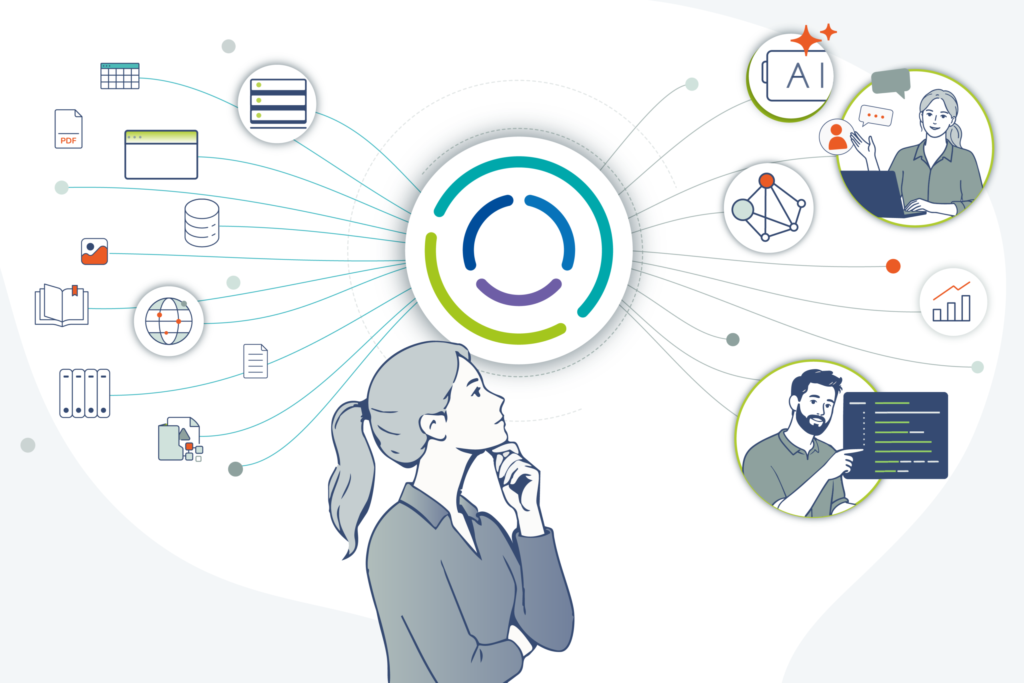
In recent years, many companies have significantly expanded their digital infrastructure. They have modernized ERP systems, implemented CRM platforms, consolidated data into data lakes and data warehouses, created interfaces, developed portals, and launched their first AI applications. On paper, this means they have much of what appears to be necessary for digital transformation: systems, data, processes, automation, and analytics tools.
And yet, a key problem persists that prevents digitalization from being comprehensive. Information remains siloed. Terminology is used differently depending on the department. Product data, service data, technical documentation, customer data, and process knowledge each follow their own logic. While systems can exchange data, they do not automatically understand what that data means in the context of the business. This is one of the most underestimated obstacles to digital transformation.
Why System Integration Alone Is Not Enough for Digital Transformation
In many digitization programs, the initial focus is on technical connections. Systems are linked via interfaces, data is replicated, and workflows are automated. While this is necessary, it does not solve the underlying structural problem. If a term means different things in different systems, if relationships between pieces of information are not clearly defined, or if context exists only in the minds of experts, a robust digital foundation cannot be established.
Here’s a simple example: In sales, a product is a sales item; in technical documentation, it’s a variant structure; in service, it’s an object relevant to maintenance; in spare parts management, it’s a bundle of components; and in development, it’s the result of requirements, functions, and specifications. Everyone is talking about “the product,” but they aren’t necessarily referring to the same information object.
As long as these meanings are not made explicit, digitalization remains superficially connected but fragmented from a technical standpoint. The company can move data, but it cannot truly scale knowledge.
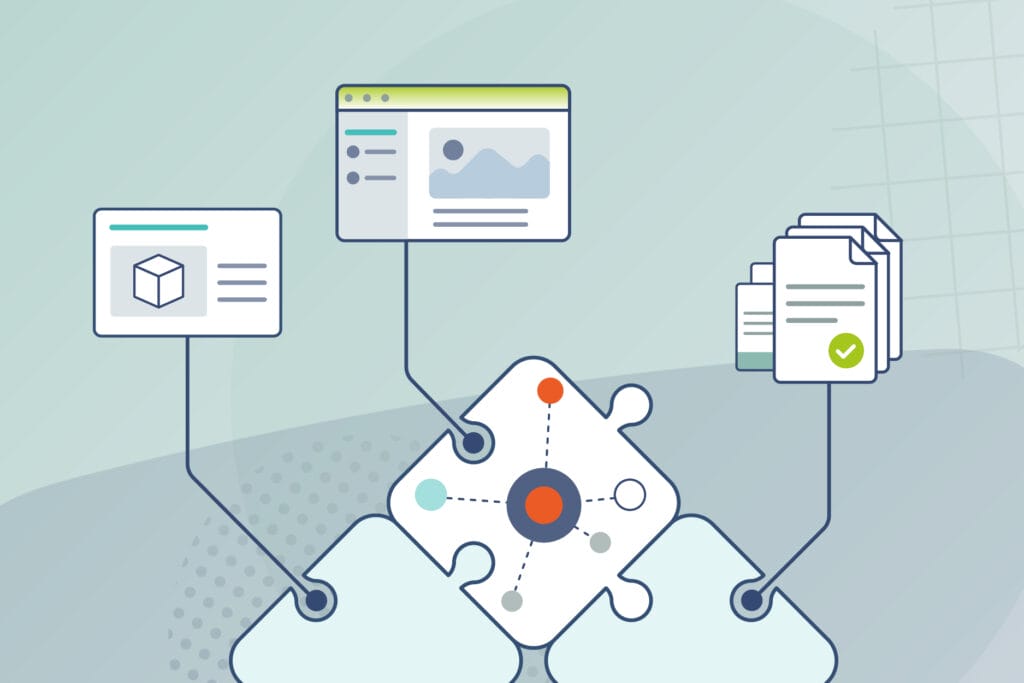
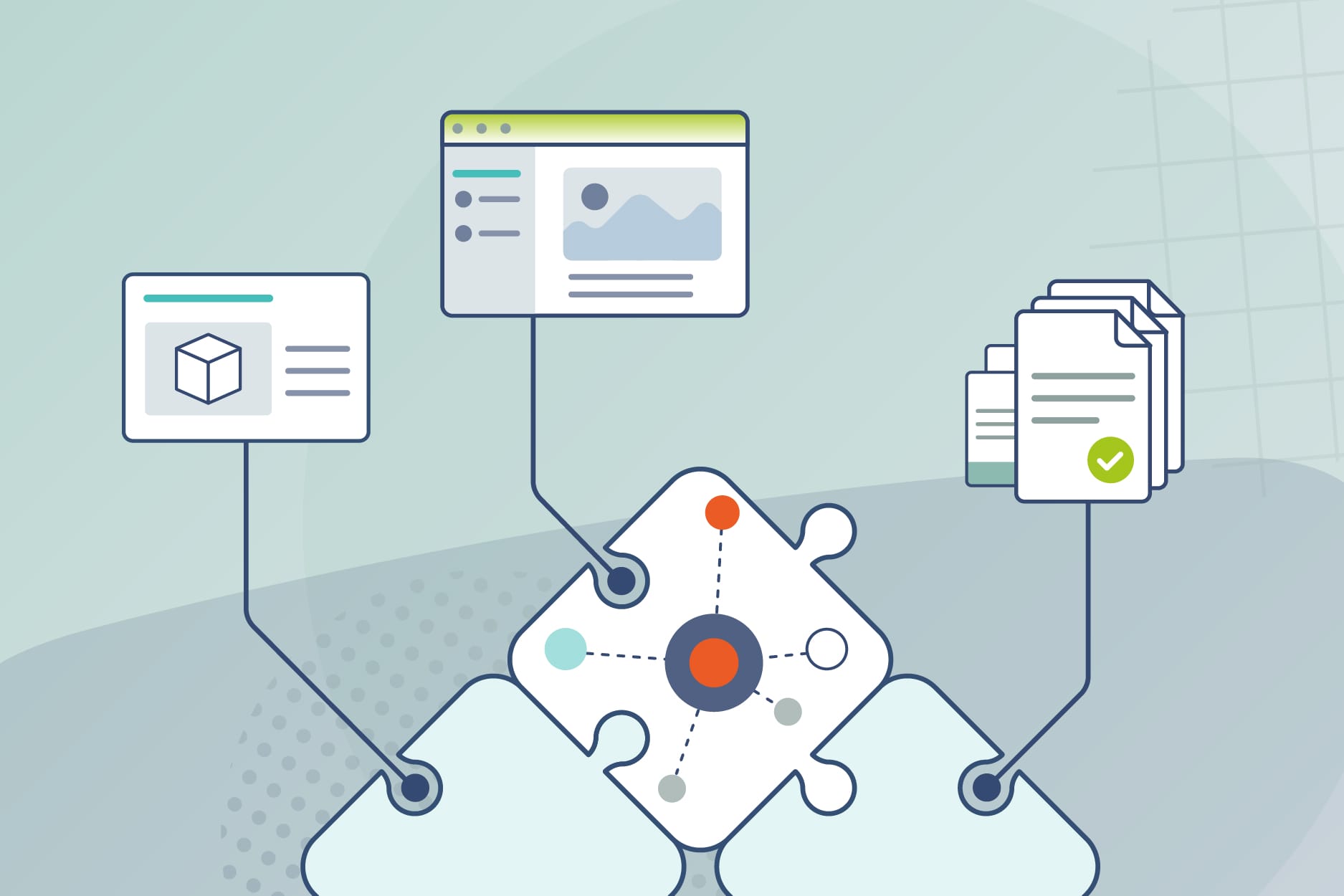
This is where ontologies come into play—not as yet another IT model, academic discipline, or substitute for existing data architectures, but as a semantic organizational layer that describes what things are relevant within the company, what they are called, what properties they have, and how they relate to one another.
Ontologies make corporate knowledge machine-readable
An ontology describes the concepts and relationships within a specific field or business context. It defines what a product, a component, a document, a fault pattern, a service case, a standard, a customer, or a function means. Above all, however, it describes the relationships between these elements.
This links knowledge rather than simply storing it. Isolated pieces of information are woven into a semantic network. That is the key difference from many traditional databases. A table can store values. A document can explain content. A system can execute processes. An ontology creates the framework of meaning within which this information can be related to one another.
For anyone involved in digital transformation within a company, this point is strategically important because ontologies bridge a gap that often doesn’t become apparent until late in many transformation programs. Companies often don’t realize until they scale up that their data landscape, while large, isn’t sufficiently interoperable. A pilot project may work within a limited scope, but not across locations, product lines, markets, or service processes. An AI application provides useful answers within a narrow dataset but fails when faced with variations, context, and domain-specific dependencies. A customer portal may look modern, but it can only display what is consistently available in the background.
Ontologies help break down this barrier. They provide a foundation on which different systems and disciplines can share not only data, but also meaning.
AI increases the pressure when it comes to context
Many companies are experimenting with generative AI, intelligent assistants, support chats, and semantic search. It quickly becomes clear that the quality of the results depends heavily on whether the company’s knowledge is structured, contextualized, and reliably accessible.
AI can process language. It can recognize patterns, summarize texts, and formulate responses. But if the underlying information is contradictory, incomplete, or lacks contextual relationships, the results will be imprecise or unreliable. Especially in technical, regulated, or service-intensive environments, simply searching through documents is not enough. AI must be able to understand which product variant is being referred to, which component is affected, which error message corresponds to which system state, and which documentation applies to which context.
Ontologies provide an important foundation for this. They give AI applications domain-specific guidelines. They help classify search queries semantically, link content correctly, and ensure that answers are not only textually plausible but also contextually relevant within the domain.
This shifts the focus of the question: It is no longer just a matter of whether a company can use AI. It is a matter of whether the company has a data foundation on which AI can operate effectively.
Digital services can only scale with a consistent information foundation
Digital business models and services, too, rely more heavily on semantic organization than it might seem at first glance. Self-service portals, intelligent spare-parts search, digital product passports, and data-driven customer offers all share the same prerequisite: information must be consistently accessible across system and departmental boundaries.
Without this foundation, a pattern often emerges that many digital transformation leaders are familiar with. A new digital service is built with significant effort for a specific area. The user interface is compelling, the technical solution works, and the business case sounds plausible. But as soon as the service needs to be scaled, cracks in the foundation become apparent. Data is not modeled consistently. Relationships are missing. Content cannot be unambiguously mapped. Business units use their own terminology. Quality must be ensured manually. What was planned as a scalable digital solution turns into an integration project requiring significant maintenance effort.
Ontologies cannot magically eliminate this complexity. But they do make it manageable. They create a shared model that various applications can access. As a result, meaning does not have to be reinterpreted in every project, remapped in every system, or retranslated in every interface.
This is a key driver of scalability. After all, digital maturity isn’t measured by how many individual applications a company deploys. It’s measured by whether new applications can build on a robust, reusable knowledge base.
Ontologies are a management issue
The term “ontology” sounds technical. As a result, the topic is often addressed too late or in too narrow a context. It is typically confined to data, documentation, or architecture teams, even though its implications extend far beyond these areas. It is crucial not to view ontologies as specialized models, but rather as building blocks of the digital enterprise architecture.
The key question is not “Do we need an ontology?” but “Where is the lack of shared meanings preventing our digital scaling today?”
From this, specific problem areas can be quickly identified:
- Where do friction losses occur between the product, service, sales, and documentation?
- Where Do AI Applications Fall Short When It Comes to Context?
- Where does data have to be interpreted manually time and time again?
- In what areas can digital services not be rolled out across markets, product variants, or business units?
- Where does knowledge reside—with experts rather than within a usable structure?
Ontologies are not a short-term solution for a single tool. Nor are they an end in themselves. Their value lies in their connection to clear business objectives: improved service processes, robust AI applications, faster access to information, consistent customer experiences, more efficient documentation, or scalable digital offerings.
The starting point, therefore, does not have to be broad or abstract. It makes more sense to begin with a relevant field of application where fragmented knowledge is currently demonstrably hindering progress. From there, a semantic structure can be built that is gradually expanded and made usable for further applications.
From Ontologies to Knowledge Graphs: Semantics Becomes Actionable
Knowledge graphs are one way to make this semantic structure technically usable. While ontologies define which terms, relationships, and rules apply in a specific context, knowledge graphs link this model to specific data and entities. This creates a knowledge structure in which information can be interpreted within its domain-specific context.
In our in-depth article on knowledge graphs in businesses, you’ll learn how a knowledge graph is created based on an ontology and what benefits such semantic technologies offer.
The next stage of digitization is semantic
Many companies have approached the first phase of digital transformation by focusing on systems, processes, and data. The next phase will be driven more by meaning. Companies that merely store corporate knowledge without structuring and linking it will repeatedly run into limitations when it comes to AI, automation, and digital services.
Ontologies are rarely the visible component of a digital solution, but they determine whether digital solutions are viable behind the scenes. They make knowledge interoperable, context-aware, and machine-readable. They help transform scattered data into a strategically usable information base.
For those responsible for digital transformation, this is precisely why ontologies are so important: they are not just another technical detail in an already complex system landscape. They are a tool for organizing complexity at a higher level.
After all, digital transformation doesn’t fail because companies lack data. It fails because data cannot be transformed into scalable knowledge without a shared context.
Strategically Developing Ontologies and Making Them Usable
PANTOPIX helps companies develop semantic structures, refine existing information models, and make knowledge accessible across system boundaries. This includes, among other things, analysis, the modeling of ontologies and taxonomies, and the creation of semantic information architectures and knowledge graphs.
For more information, visit Knowledge Graphs and Semantic Information Models.

Sandy Hedig
Marketing Manager | PANTOPIX
We will be happy to inform you regularly about new articles, videos or podcast episodes.

Knowledge
Learn more about connecting information