16. July 2026
Many digital transformation initiatives in industrial companies begin with a seemingly simple question: How can we better get our information to the people who need it? In practice, this question often leads to portals, search interfaces, self-service offerings, or content delivery systems. After all, anyone who needs to provide technical documentation, product information, service content, or internal knowledge resources first needs a reliable way to publish and navigate that content.
However, for many companies, this level is no longer sufficient. Today’s need for knowledge can no longer be met simply by making content available somewhere. Knowledge must be understood, linked, and usable in context across system boundaries. In the tension between the availability and usability of information, traditional content delivery portals (CDPs) are reaching their limits.
In the future, knowledge and information management will increasingly require solutions that go one level deeper and create a semantic knowledge base on which content, data, and relationships can be utilized by portals, assistants, chatbots, or other applications. The difference, quite simply, lies between finding and understanding.
To illustrate this difference, in the following article we compare the classic CDP with our Knowledge Platform, PANTOPIX SPHERE.
Findability in the content delivery portal does not automatically solve the knowledge problem
A content delivery portal serves an important purpose: it makes content accessible. It brings together documentation, product information, service content, and internal knowledge resources in one place, organizes them using categories and metadata, and enables users to find relevant content more quickly.
Its strength lies in navigation. Users search for a topic, open a piece of content, and decide for themselves what is relevant. This follows a familiar pattern of digital information use: search query, evaluate results, read documents, compare information, and arrive at an answer.
For many use cases, this represents a significant improvement over scattered PDFs, file servers, or isolated content management systems.
The limitation of traditional CDPs lies between navigation and context
However, finding a document does not automatically provide the right answer. This is because the relevant information is often not contained in a single piece of content, but rather in the context of multiple knowledge objects—such as a product feature, a variant, a service instruction, an error message, a replacement part, or a process step. A CDP can provide such content and make it accessible via metadata. However, it does not, on its own, reveal the technical relationships between them.
But this is crucial, especially in technical communication. The challenge companies face isn’t that there’s too little content, but rather that knowledge is vast and not sufficiently interconnected. Terms are used differently across various systems. While experts are aware of the relationships between pieces of information, these relationships aren’t modeled in a way that machines can read. A CDP can certainly bring order to content delivery, but it doesn’t automatically create a shared understanding of the meaning and context of the content.
From Content Delivery to a Knowledge Network
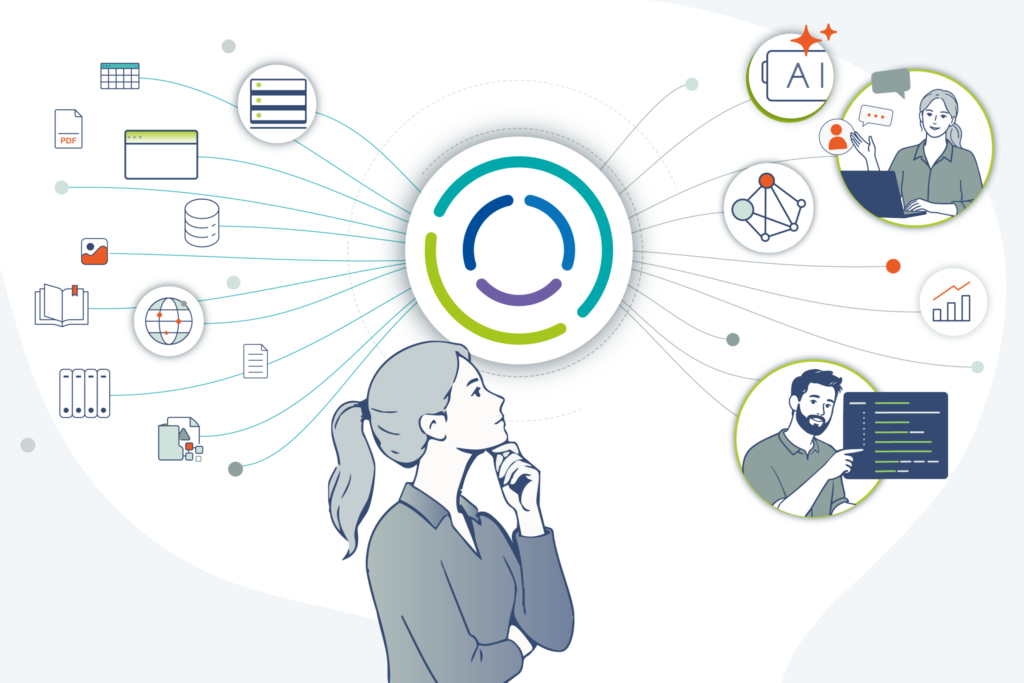
That is the key difference between a CDP and a knowledge platform like PANTOPIX SPHERE. The platform is neither a CDP nor does it need one to deliver content. It aims to establish connections between information from various sources and map them in a knowledge graph. This makes connections explicit that often remain hidden in traditional portal structures.
A comparison makes it clear:
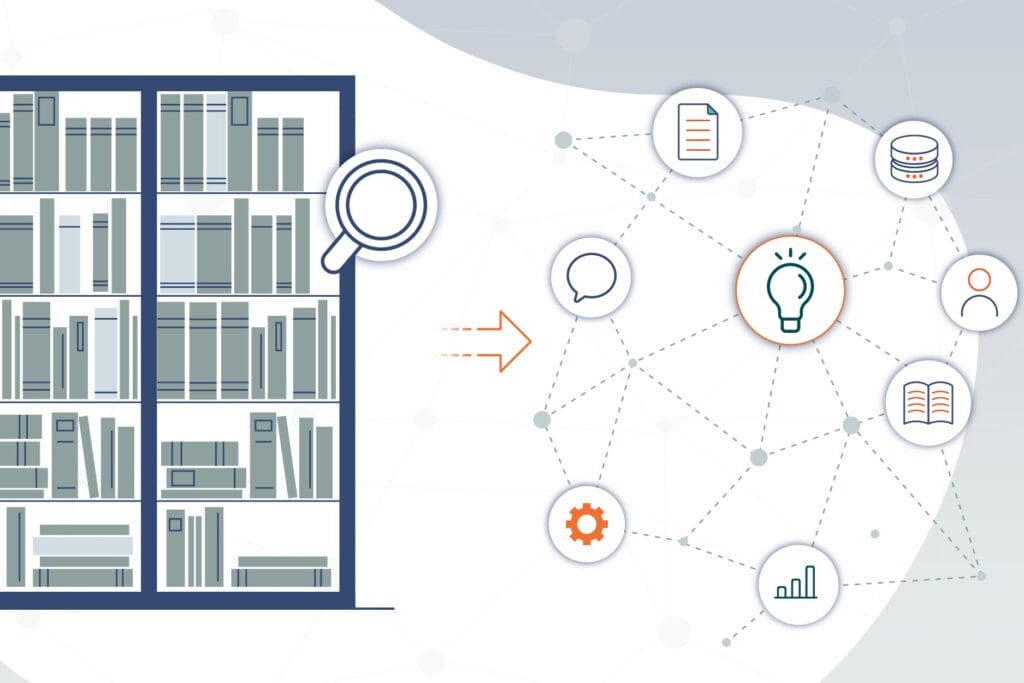
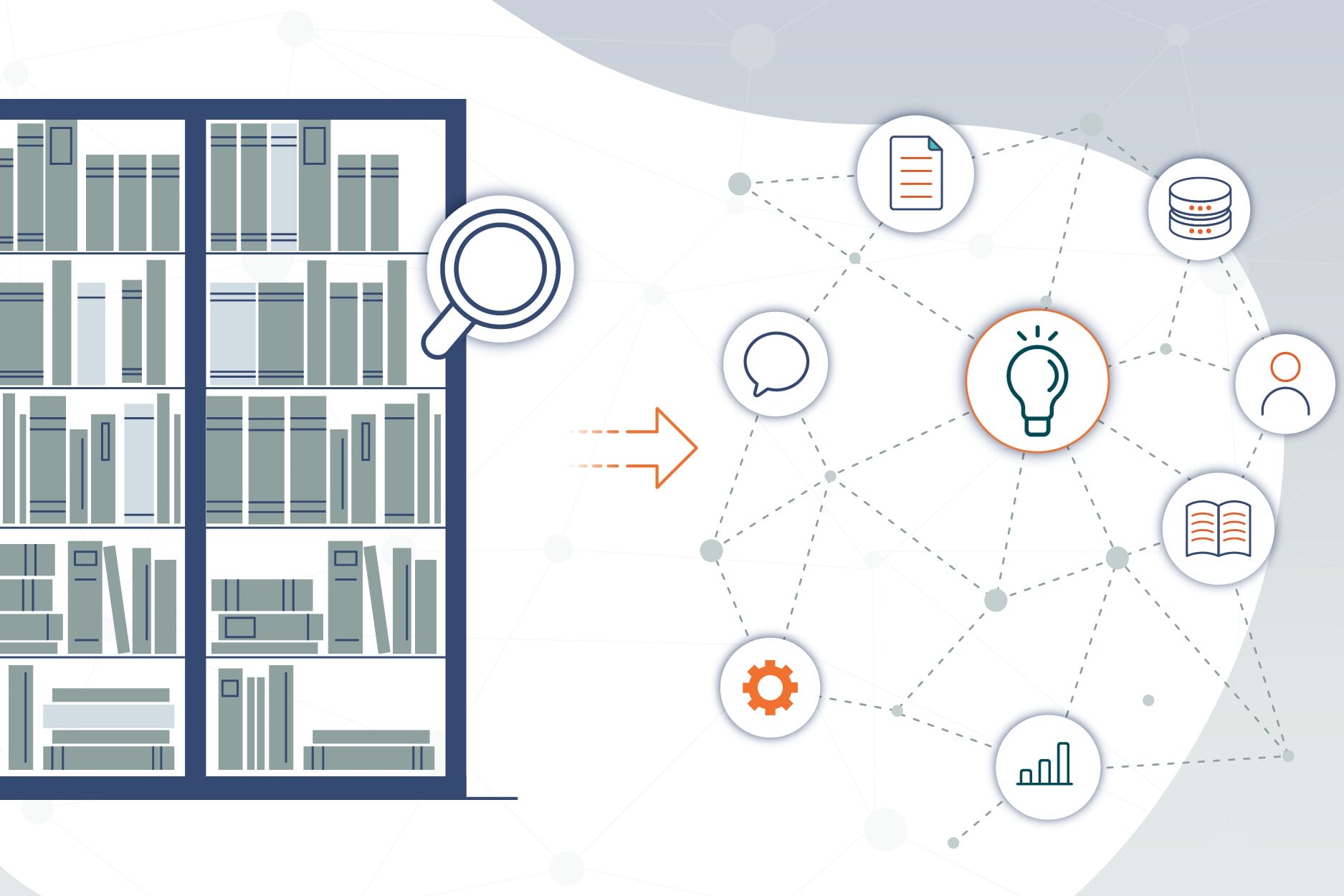
A content delivery portal is like a large, well-organized library: All available books are neatly cataloged and can be found on clearly labeled shelves. Anyone can search by topic and find out where something is located. And certain relationships can be mapped out—for example, which books are related because they’re by the same author. The library knows its holdings. But even the best librarian doesn’t know the contents of every available book. Finding the right information can be quick, but it can also sometimes be very time-consuming and labor-intensive.
PANTOPIX SPHERE is not a library. PANTOPIX SPHERE is, rather, the collective memory of all connected libraries. It has not only classified and cataloged every book; it has also read each one and memorized its contents. That is why it is able to establish connections between the contents of different books without those connections having been explicitly defined beforehand. This means PANTOPIX SPHERE can replicate a library (i.e., populate a CDP) if needed, but it does not require this step. Information can be delivered in a wide variety of digital formats, such as websites, guide-selling tools, custom apps, AI chatbots, or Agentic AI applications.
Connected knowledge is becoming a prerequisite for digital assistants
The difference between a CDP and PANTOPIX SPHERE becomes particularly apparent when companies want to implement chatbots, service assistants, or AI-powered applications. The user interface of such applications often looks modern and powerful. However, what really matters is not the conversational interface, but the knowledge base behind it.
An assistant that merely refers to documents remains, at its core, just another form of search. It only becomes truly helpful when it can answer questions within their context. To do this, it needs access to knowledge that is not merely stored, but structured, semantically described, and linked across system boundaries. It must be able to recognize which pieces of information belong together, which terms mean the same thing, which product variant is being referred to, and which answer is relevant to the specific use case.
PANTOPIX SPHERE addresses precisely this level. By combining knowledge modeling, semantic structure, and data integration, it is possible to create a knowledge base that not only delivers content but also enables answers.
The four components of the platform—metadata management, automated data flows, data enrichment, and dialog-based access—mesh together like gears: standardized terms, categories, and relationships create semantic order. Linking distributed sources ensures that knowledge is not confined by system boundaries.
Provide content or make knowledge accessible?
In many companies, content delivery systems perform very specific and necessary tasks. They ensure that information can be published, found, and used. When users are expected to search for, compare, and interpret content on their own and piece it together to form an answer, a well-organized content delivery system (CDP) can be exactly the right solution. In such cases, navigation takes center stage.
However, if knowledge is to be utilized by digital assistants, chatbots, service applications, or AI-powered processes, simply making it available is no longer enough. In such cases, the meanings, relationships, and contexts of the content must be made accessible.
The key question is: In what form must knowledge be organized today to enable digital value creation? Those who want to make information discoverable organize content in a content delivery portal. Those who want to enable AI, digital assistants, or intelligent services need a networked knowledge base.
Karsten Schrempp, Founder & Managing Director PANTOPIX
A CDP and a knowledge platform thus serve different purposes. However, a CDP can also serve as a potential distribution channel for PANTOPIX SPHERE, through which content can be made available and navigable. “The platform creates the underlying semantic knowledge base: Information is not merely stored, but linked, contextualized, and made available in a machine-readable format—as the foundation for connected content delivery.”
This knowledge base can consistently support a variety of applications—content delivery portals, websites, service applications, digital assistants, chatbots, or AI-powered processes. The real difference, therefore, lies not between two competing systems, but between two levels: Content delivery makes information accessible. Knowledge enablement makes knowledge usable for people and machines.

Sandy Hedig
Marketing Manager | PANTOPIX
We will be happy to inform you regularly about new articles, videos or podcast episodes.

Knowledge
Learn more about connecting information