Technical communication faces the challenge of conveying complex information clearly and comprehensibly. Traditionally, information is organized in comprehensive, coherent documents. Each document deals with a variety of topics that are often presented in a linear structure. Changes and updates often require searching and revising the entire document, which can be time-consuming and error-prone. In addition, the question arises as to whether users really always need an entire document or just parts of the document.
This is precisely where topic orientation comes into play in technical communication. It dissolves the classic document structure and organizes information in modular, reusable units. The changeover from a document-based to a topic-oriented approach entails far-reaching changes and offers numerous advantages.
But what exactly is behind topic orientation and why is it so useful for technical communication?
What are topics?
Topics are small, self-contained units of information in technical communication. They deal with a specific topic or answer a specific question. For example, a topic can be an instruction on how to operate a device, an explanation of a concept or technical data. Topics can be created, updated and reused independently of each other.
There are some criteria for topics that should be taken into account when creating them.
Coherent: Is the topic coherent in terms of content?
Cohesive: Do linguistic means in a topic not refer beyond the topic?
Informative: Does the topic provide valuable information?
Situational: Is the topic relevant in the context of the action?
Intertextual: Can the topic be linked to other topics?
From document to topic
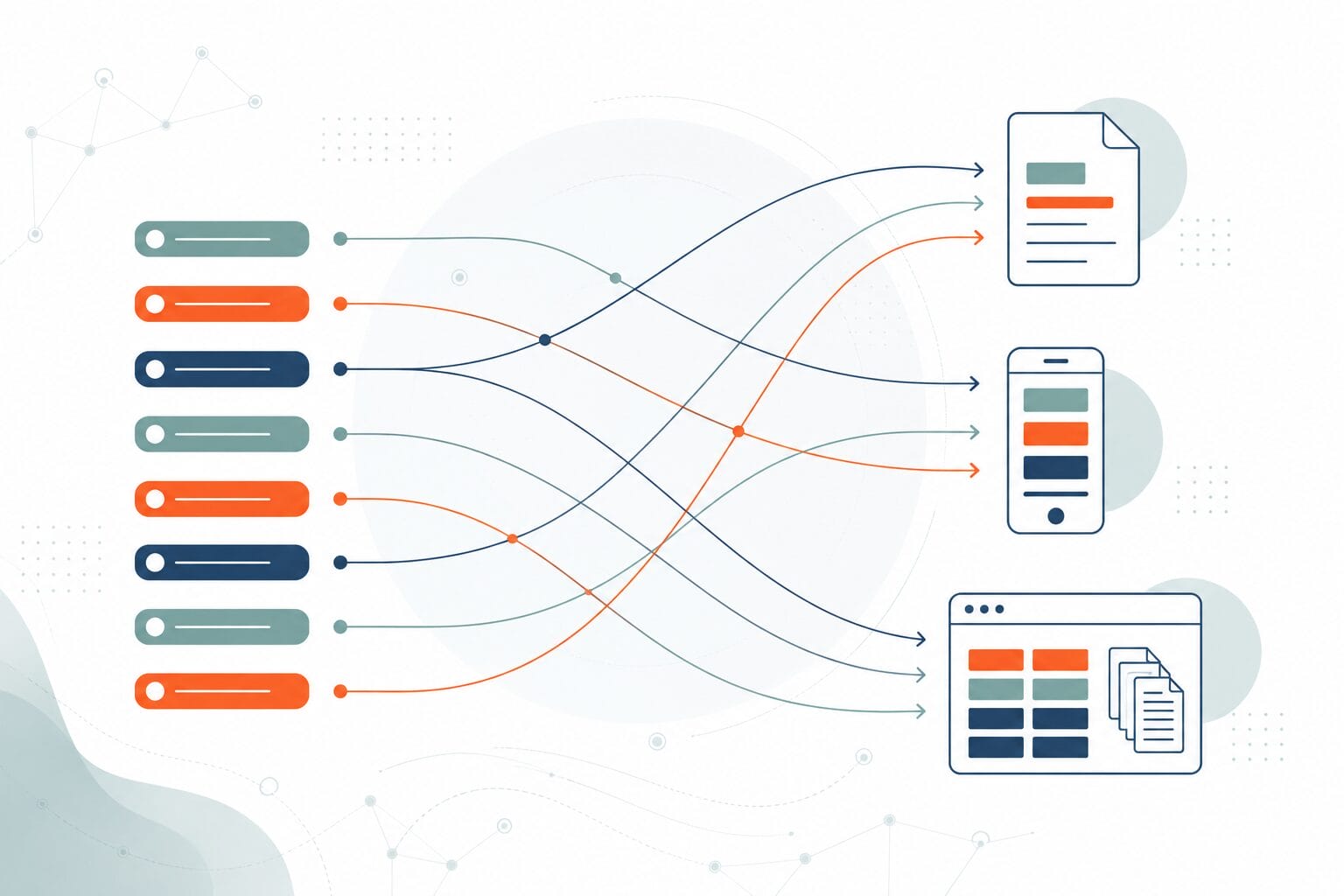
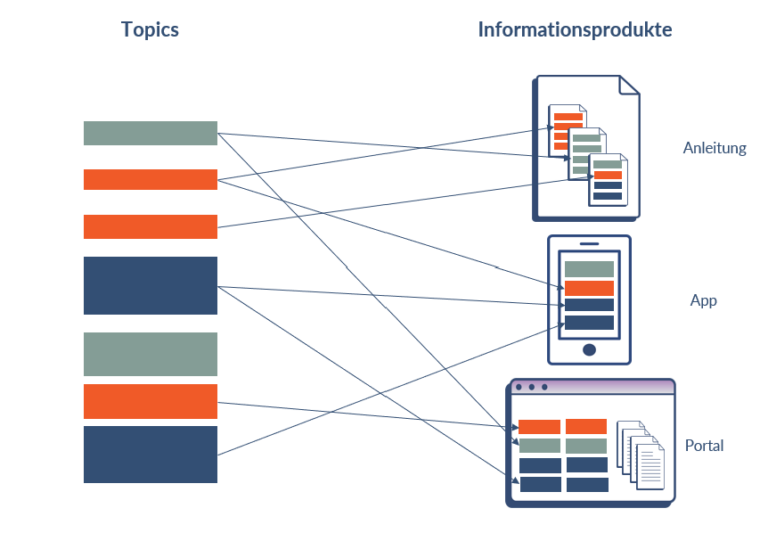
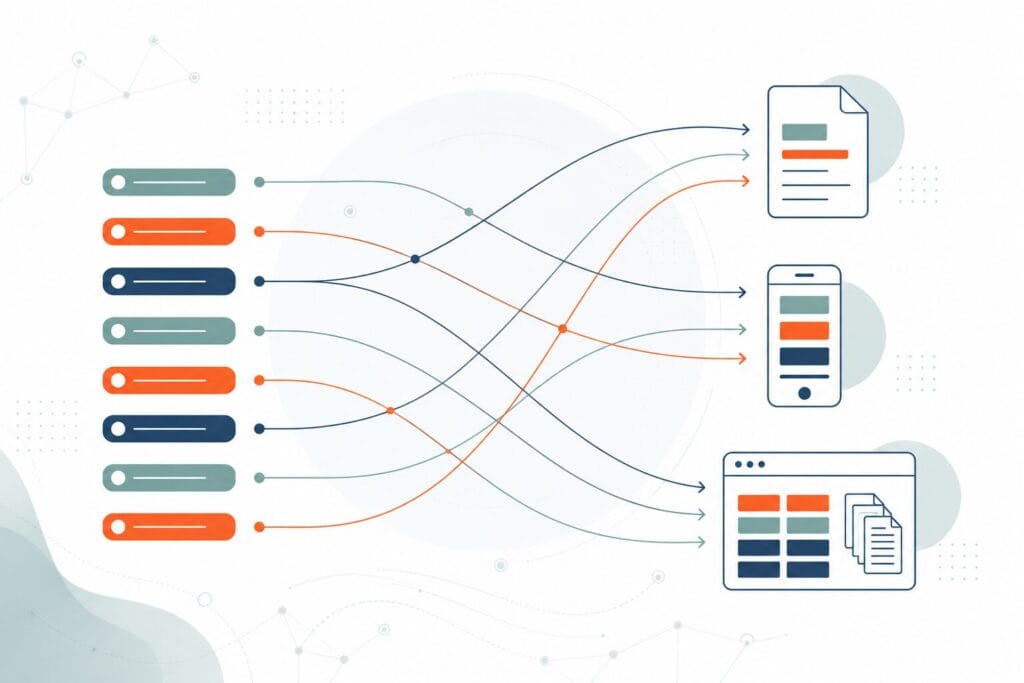
Topic orientation is the methodical approach in which the entire documentation is divided into individual topics. Instead of creating long, coherent texts, the content is broken down into small, specialized units. These units can then be compiled, reorganized and published in different formats as required.
Topic orientation offers the following advantages for technical editors:
Reusability: Once topics have been created, they can be reused in different documentation and contexts.
Consistency: For each topic type, there are clear rules on how it must be structured and formulated.
Flexibility: Topics can be easily reorganized and adapted to meet the specific requirements of different target groups and publication channels (web, print, mobile).
Update: Changes only have to be made once in a topic and are immediately effective in all documents that use this topic.
Targeted information: Content can be tailored to the needs of the respective target group.
Scalability: As the amount of information grows, the documentation remains clear and well-structured.
The role of metadata in topic orientation
Metadata is a central component of topic orientation. It ensures systematic and efficient organization and targeted provision of content. For example, topics are categorized into different topic types using information-specific metadata. So-called product-specific metadata in turn locates a topic at the point on the product (e.g. a component) to which this topic belongs.
Ready for the future with Topics
Topic orientation prepares technical communication for the requirements of Industry 4.0 by enabling the flexible, efficient and consistent creation of technical content. By dividing content into small, reusable units, editors can increase their productivity and improve the quality of their work at the same time. Modularization facilitates teamwork, as individual topics can be created and edited by different authors.
For the editorial team, the switch from documents to topics specifically means developing a suitable content strategy, selecting and introducing suitable tools and technologies, creating taxonomies and converting content into topics. Although this process requires initial effort and careful planning, in the long term it leads to significant benefits for the technical editorial team and the users of the documentation. In the long term, topic orientation therefore enables a more efficient and productive way of working that meets the requirements of modern technical communication.
Karsten Schrempp
Managing Director | PANTOPIX
We will be happy to inform you regularly about new articles, videos or podcast episodes.