

























Knowledge graphs as the basis for reliable AI in the company

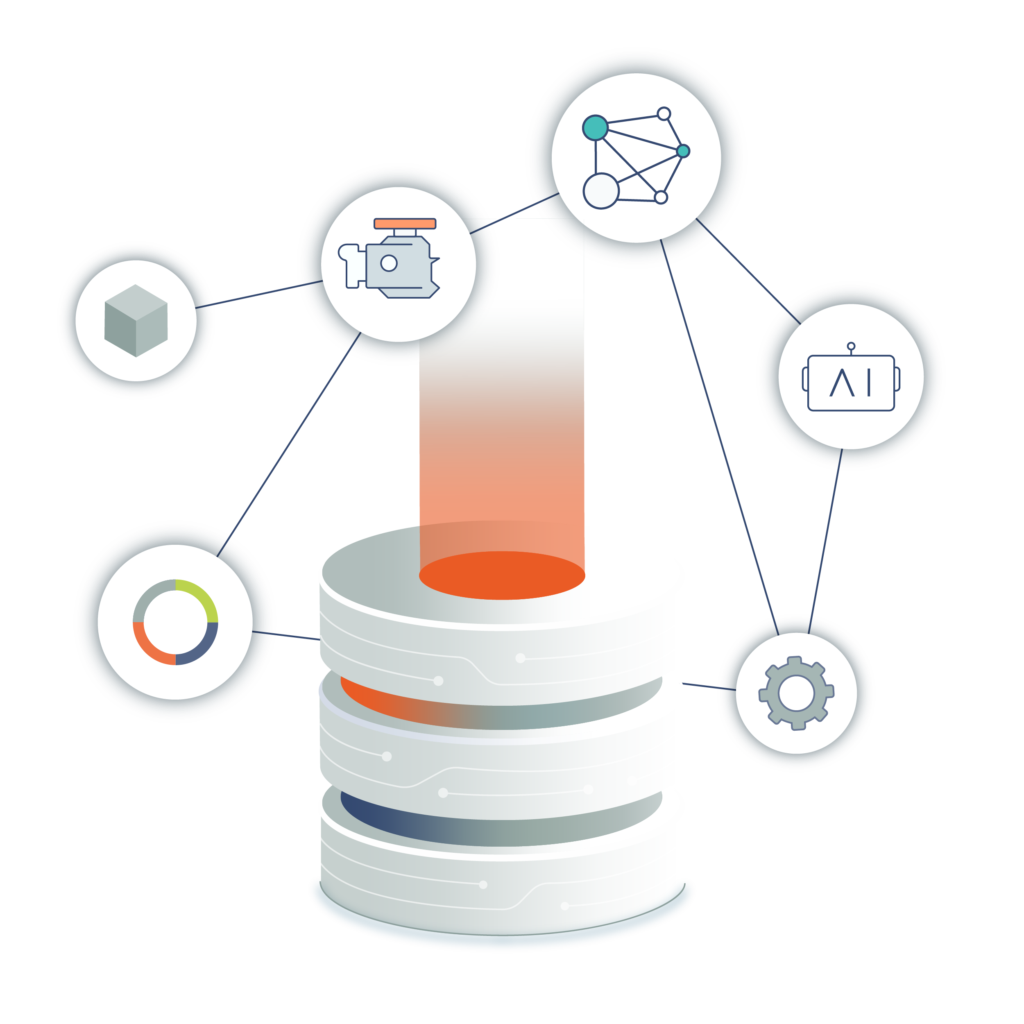
Link data and information, build an AI-enabled knowledge base and increase efficiency and transparency in your company.

AI needs knowledge graph

Leading companies trust us

Whitepaper

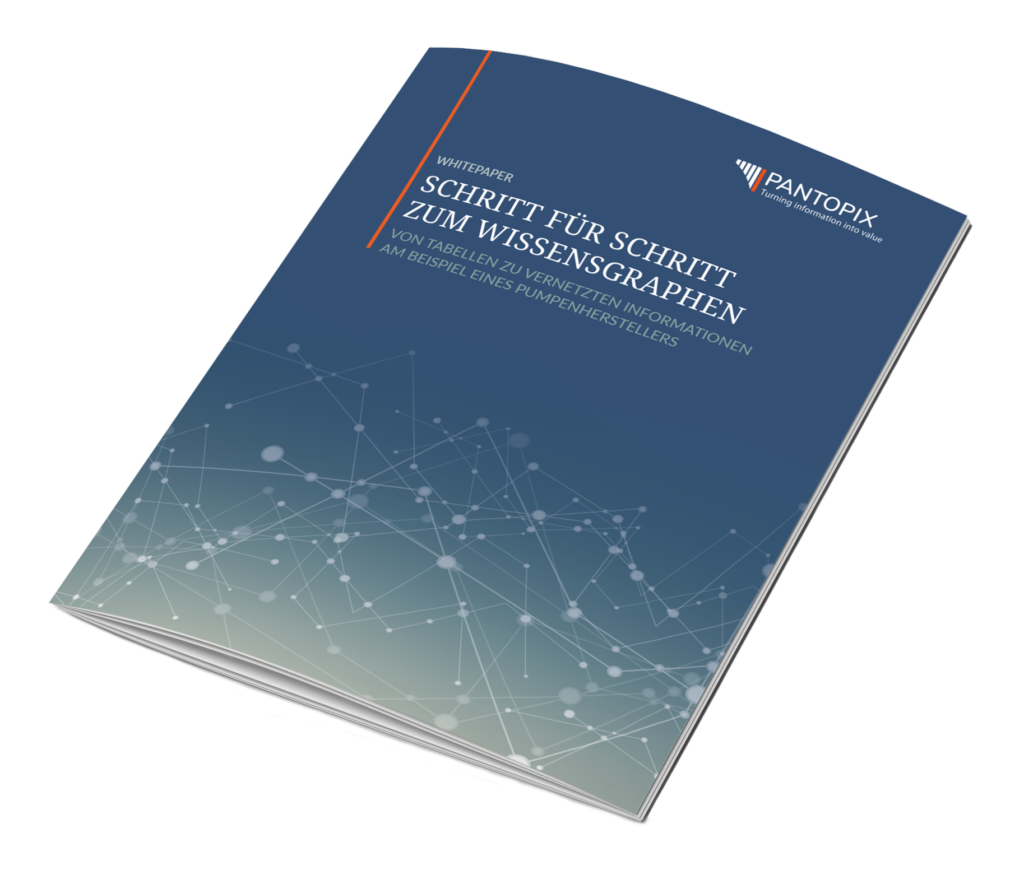
The path to the knowledge graph

Using the example of a pump manufacturer, find out how product data is transferred into a knowledge graph and what potential this offers for data-driven applications.

Knowledge graph cover mock-up

From data silos to Ki-capable knowledge

Typical challenges

  • Distributed and unstructured information
    Company information is available in many systems and cannot be used as a structured, networked knowledge base.

  • AI without a reliable knowledge base
    Without knowledge models and knowledge networking, AI systems do not provide consistent or reliable answers.

  • Lack of transparency of relationships
    Important relationships between data, documents and entities remain implicit and only exist in the minds of employees.

  • High integration and scaling costs
    The development of an enterprise knowledge graph often fails due to complex IT landscapes and a lack of scalability.

Added value through knowledge graphs

  • Structured company information
    Knowledge graphs link information across systems and create a central, consistent knowledge base.

  • AI-enabled knowledge base
    As the basis for Knowledge Graph RAG and Knowledge Graph LLM, knowledge graphs enable context-related and reliable AI answers.

  • Explicit knowledge models
    Relationships and correlations are modeled and made machine-readable – ideal for complex industrial and mechanical engineering scenarios.

  • Basis for AI applications
    An enterprise knowledge graph forms the heart of portals, assistance systems, dashboards and other data- and AI-driven applications.
Topix
Knowledge Graph briefly explained

What are Knowledge Graphs

Knowledge graphs: the basis for reliable AI

Knowledge graphs link information from different systems into explicit, structured knowledge, make hidden connections visible and create the basis for better decisions and AI applications.

PANTOPIX is your experienced partner for the design, modeling and implementation of powerful knowledge graphs in existing IT architectures.

Knowledge Graphs & LLM

Why knowledge graphs make AI reliable

Knowledge graphs and LLMs complement each other perfectly: while LLMs understand and generate language flexibly, knowledge graphs provide the structured, reliable knowledge base in the background. This results in more precise, comprehensible and context-related answers.

Create clarity with an AI-enabled knowledge base, we will be happy to advise you!

Our approach

Step by step
to the knowledge graph

Start with initial use cases and expand the knowledge graph step by step.
From the idea to technical validation to a scalable solution, this creates a sustainable basis for AI applications.

Consulting

Identify use cases and understand requirements

Together, we analyze your initial situation and identify specific use cases. We analyze your data landscape, existing information flows and data silos. In doing so, we focus on rapid added value and a clear objective for the use of a knowledge graph.

Proof of concept

Data analysis & knowledge model conception

In the proof of concept, we show the technical feasibility and demonstrate how your data can be transformed into networked knowledge. We develop a robust knowledge model (taxonomy, ontology, thesaurus) and a technical architecture, the basis for a scalable, AI-capable knowledge base.

MVP & Scale-Up

Implement initial solutions and expand in a targeted manner

The first productive use case is created with a minimum viable product (MVP). Building on this, we create a roadmap for the rollout and company-wide integration so that your knowledge graph is successful and AI-ready in the long term.
Zeiss_Logo

Service Copilot from ZEISS RMS

The intelligent assistant that every service team wants.

For the service team at ZEISS Research Microscopy Solutions (RMS), every request meant having to compile information from countless documents in far too many sources. Now they are supported by Service Copilot, an intelligent assistant that links knowledge graphs with Agentic AI – and makes the service for ZEISS microscopes as efficient as research demands.

RAG or GraphRAG: Which knowledge base provides reliable AI answers?

Retrieval Augmented Generation (RAG) is the first step for many companies to link LLMs with their own information. However, classic RAG quickly reaches its limits when it comes to complex, connected company knowledge.

GraphRAG combines RAG with knowledge graphs to create significantly more context, consistency and control.

Up to 40 % better answers through real context

Current studies show that AI models deliver significantly more precise results when they are based on structured knowledge: While direct queries on databases only achieve a low hit rate, accuracy increases significantly with a knowledge graph as a basis.
The additional context makes the difference - for comprehensible and reliable answers.

Classic RAG finds information

Documents are converted into vectors, semantically searched and passed to an LLM as context.

  • No explicit understanding of relationships and context
  • Inconsistent answers to similar questions
  • Hallucinations possible despite retrieval
  • Low comprehensibility of the answers
  • Limited suitability for complex corporate knowledge

GraphRAG understands connections

A knowledge graph explicitly models entities, relationships and rules. RAG accesses this knowledge in a targeted manner.

  • Significantly higher contextual reference
  • Consistent AI responses across different queries
  • Fewer hallucinations due to explicit knowledge models
  • Explainable & comprehensible answers: Sources, relationships and decision-making logic are transparent
  • Stable foundation for scalable AI applications

Contact person

We look forward to your inquiry

Karsten Schrempp

Partner & Consultant

FAQ

Frequently asked questions about knowledge graphs and AI in the company

What is a knowledge graph?

A knowledge graph is a structured representation of knowledge in the form of a semantic network. This connects data via nodes (entities) and edges (relationships) and uses semantics to make the connections between information understandable. This breaks down information silos and makes company-specific knowledge – for example about products – usable. It does not matter whether the data is available in structured or unstructured form.

AI knowledge graph is based on the principle of the knowledge graph, but goes one step further: AI techniques are used to automatically create, expand or evaluate the graph.

  • AI helps, for example, with extracting knowledge from texts, recognizing missing relationships or deducing new facts.
  • Focus: Integration of AI to not only store knowledge, but to make it intelligently usable.

Knowledge graphs help to connect information from different data silos and bring it into a common context. This makes connections visible that were previously hidden. Knowledge becomes structured, findable and reusable. A well-known example is Google’s Knowledge Graph: it ensures that Google not only recognizes search terms, but also understands the meaning behind them, e.g. that “Paris” can be a city, a person or a figure from mythology. It is precisely this principle that can also be used in companies to intelligently link technical information, product data or customer knowledge and make it accessible. Such knowledge presentations are particularly valuable in the age of AI, as they provide fact-based data structures and thus reduce the risk of so-called “hallucinations”. They make knowledge transparent and verifiable and create a reliable basis for data-driven decisions, analyses and new services.

RAG (Retrieval-Augmented Generation) searches documents and provides AI answers based on texts. This works well for simple queries – but classic RAG quickly reaches its limits when it comes to complex, highly networked knowledge: Answers can be inconsistent, hallucinations can occur and comprehensibility suffers.

GraphRAG combines RAG with a knowledge graph that explicitly models entities, relationships and rules. This allows companies to benefit from:

  • Better context and consistent answers
  • Less hallucinations through structured knowledge
  • Explainable results with transparent sources and correlations
  • Scalable solutions for complex corporate knowledge


In short: Classic RAG provides quick answers from documents, GraphRAG provides reliable, comprehensible and consistent answers, especially for complex, networked knowledge.

Your question is not listed?

We will be happy to answer all open questions personally.